Skip to content

AfterLife Posts

391. marco avellaneda ◊

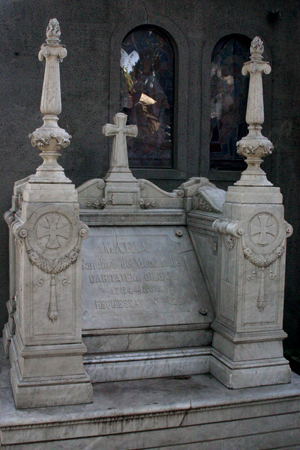
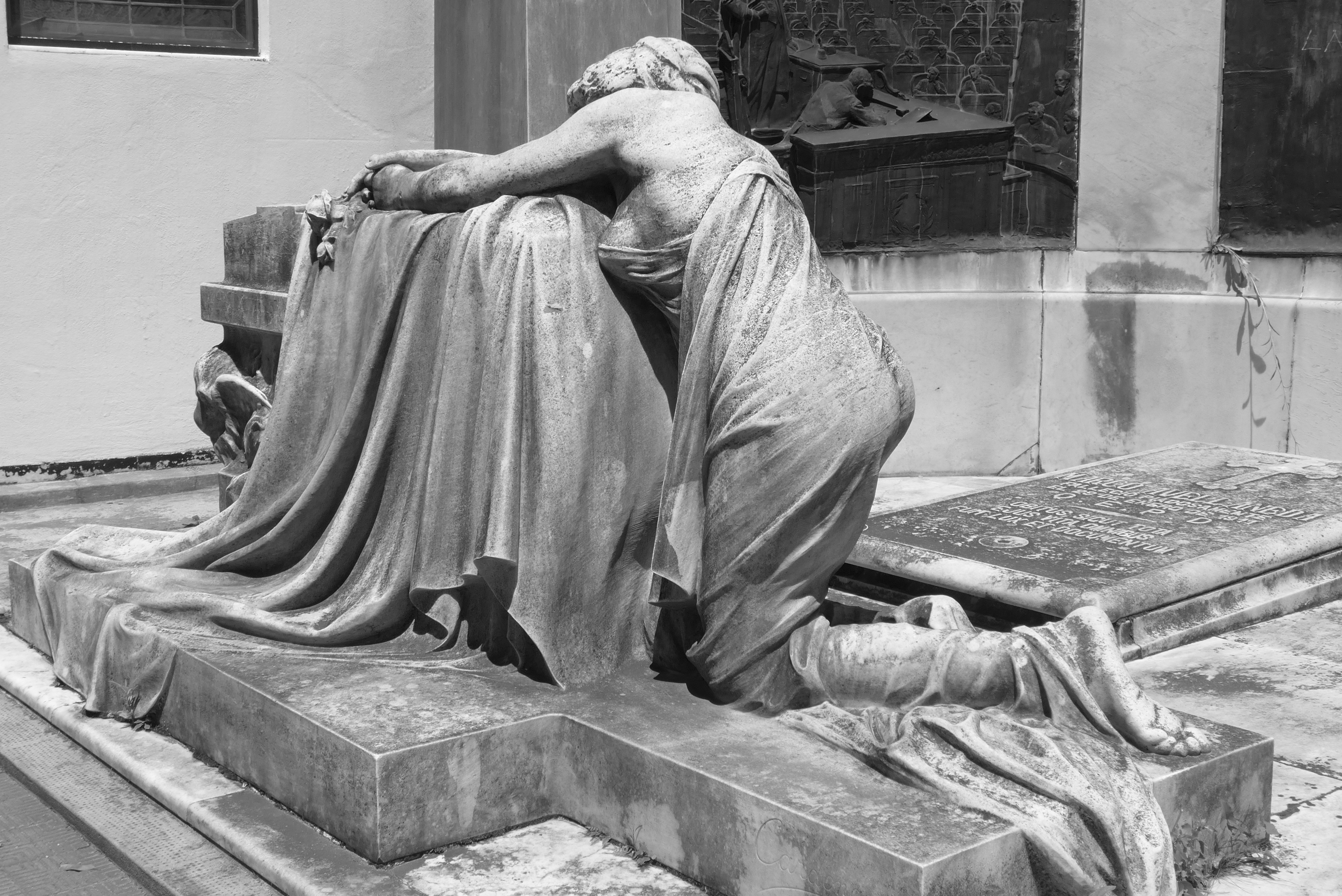
Marco Avellaneda, Recoleta Cemetery

Marco Avellaneda, Recoleta Cemetery

As President of the Cámara de Diputados (an equivalent to the US House of Representatives) from 1896 to 1901 —as well as brother of President Nicolás Avellaneda— Marco was decidedly not in favor of universal male suffrage & spoke out against the Ley Sáenz Peña. However, his lifetime service to Argentina in public office made him a well-known & recognized figure.

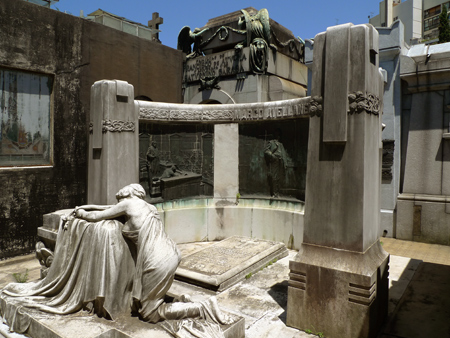
Passing away in 1911, the Art Nouveau sculpture signed “Cardona” has been admired by many… if you can find it!

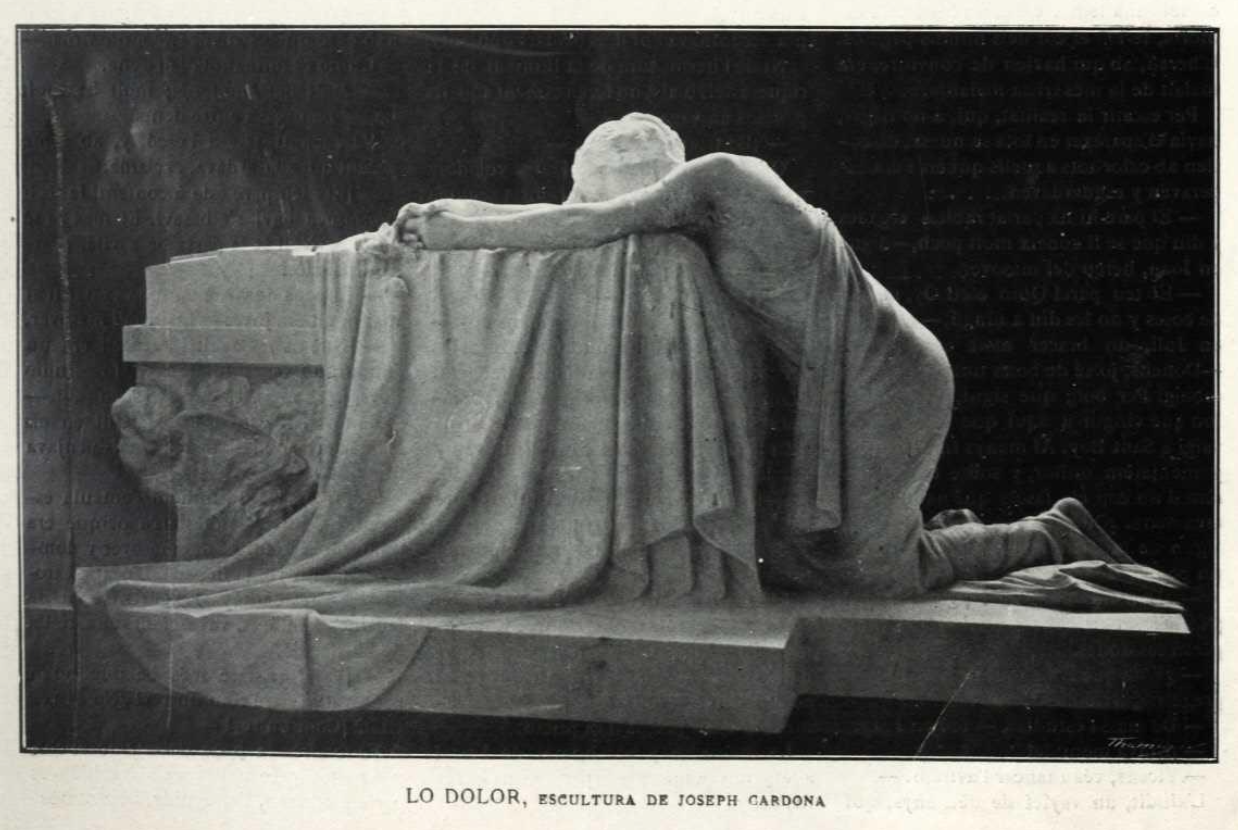
Update (December 2025): Graciela Blanco has done some fantastic research into the sculpture titled “Lo Dolor” in a 1914 edition of the art magazine “Ilustració Catalana” (Year XII, Nº 596) & attributed to Joseph Cardona:
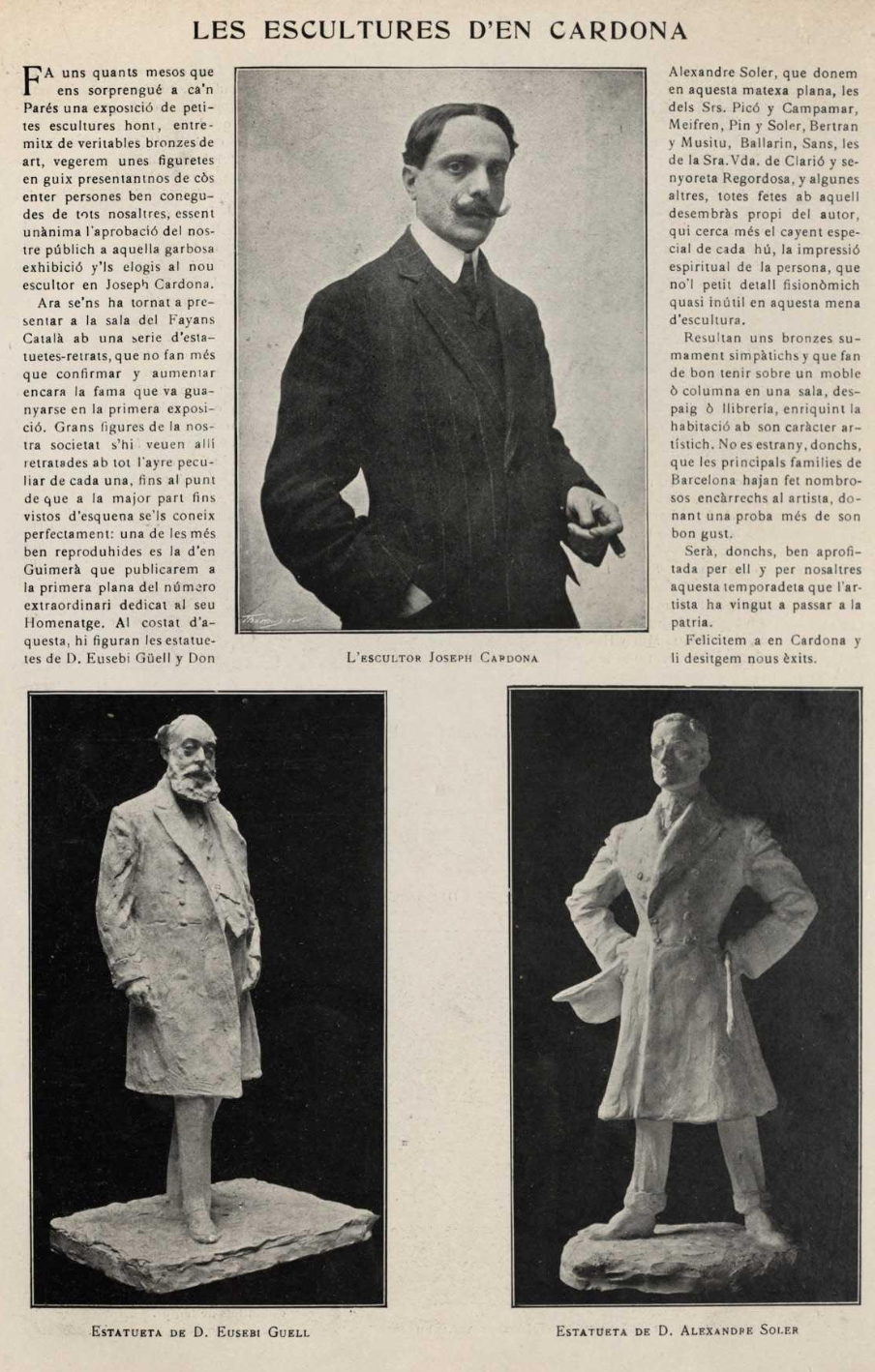
In 1909, Josep/Joseph Cardona was already a prominent artist in the Catalan community as noted by a two-page feature in the same magazine (Ilustració Catalana, Year VII, Nº 314):
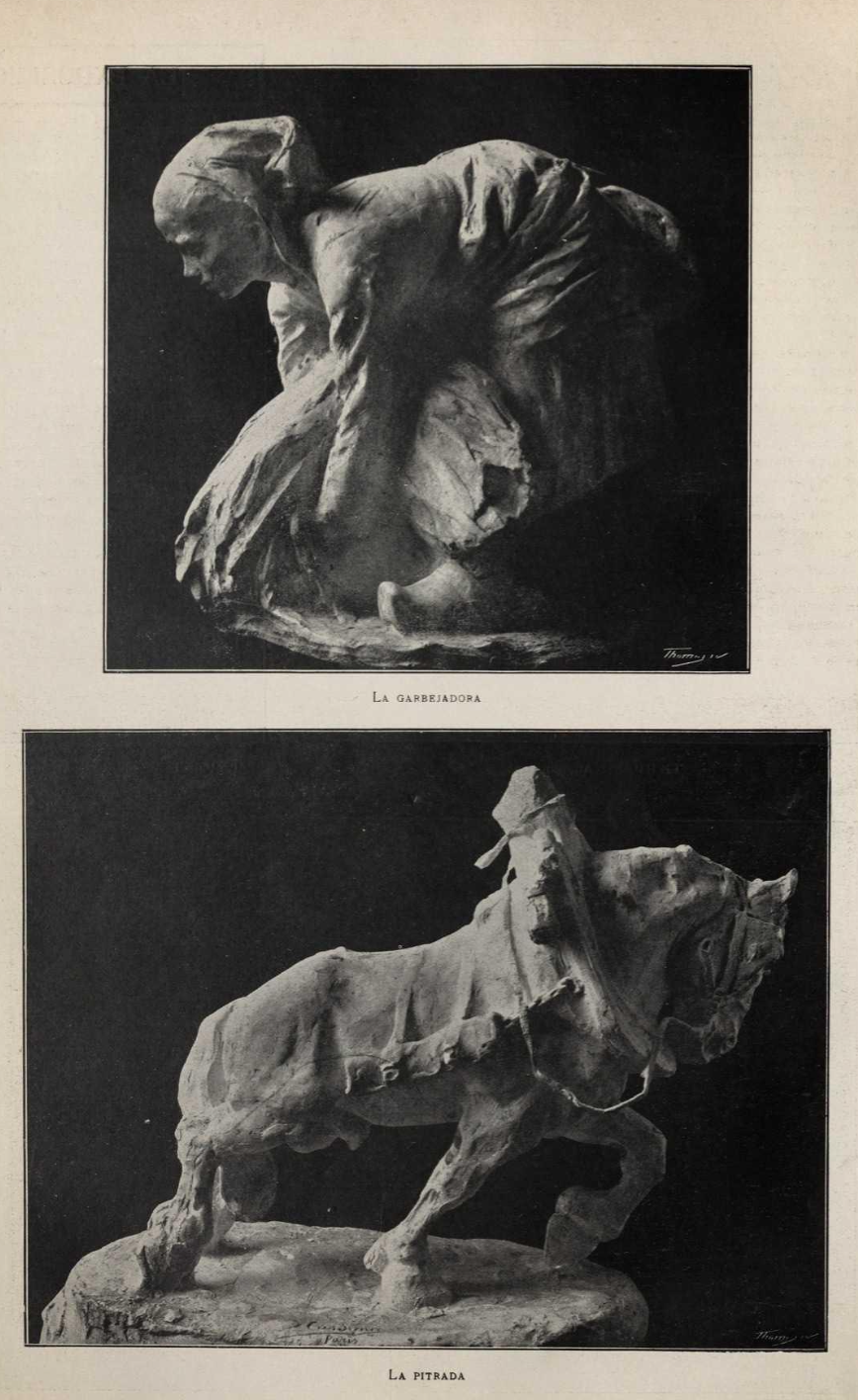
In fact, praise of Cardona would continue even after sculpting the funeral monument for Marco Avellaneda (La Ilustración Artística, Year XXXI, Nº 1572):
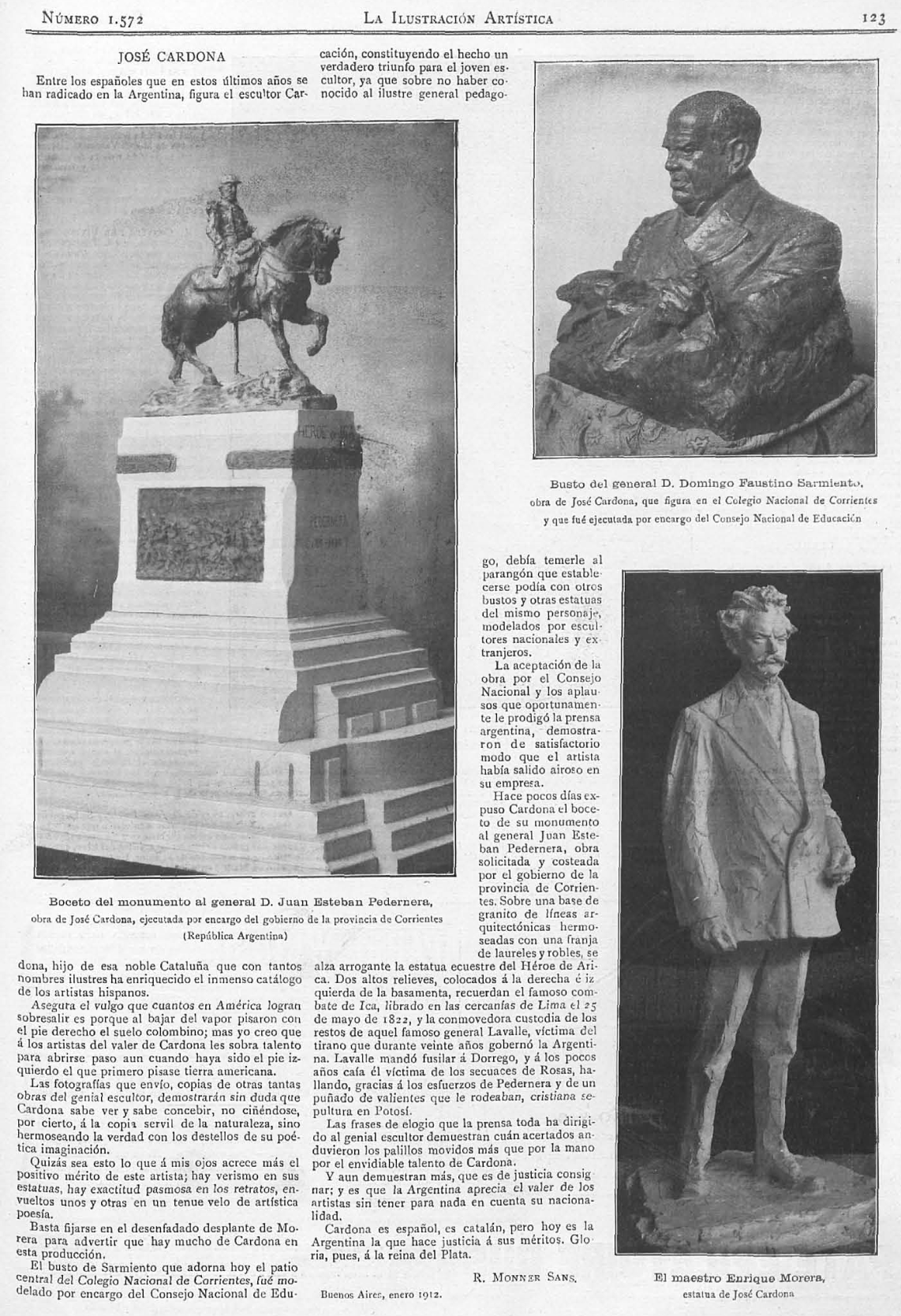
Authors Fátima López Pérez & M. Ángles López Piqueras state that Cardona lived in Argentina from 1909 to 1918 (with a brief stay in Barcelona during 1912-13) & was warmly welcomed back to his homeland:

Returning from Argentina and after a few days in Madrid, the notable sculptor Joseph Cardona is in our city […] We give our cordial welcome to the artist, rejoicing in the triumphs achieved in America, which are ultimately triumphs for Catalonia.

However, Blanco notes that Juan José Cardona Morera —Josep Cardona’s nephew & a sculptor as well— came to Buenos Aires & lived with his uncle during the production of the funeral statue. So who was the artist? Uncle or nephew? It’s an odd puzzle with even official websites confusing the two artists.

While we may never know for certain, I’m of the belief that the uncle (who was more established in 1911) was responsible for this beautiful artwork. Blanco did compare signatures & is not convinced, but that characteristic swoop underneath the uncle’s name appears on all of his other work… however, you decide for yourself 😉
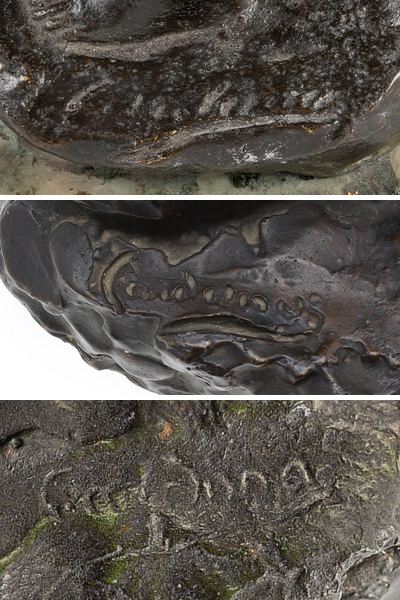
Look for Cardona’s signature at the bottom right of the pedestal/base.
2 Comments

390. cat care

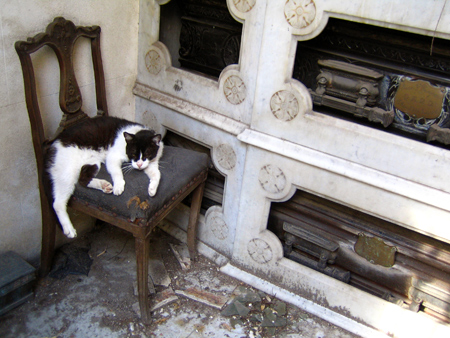
Cats, Recoleta Cemetery

One of the most common —& perhaps surprising— sites at Recoleta Cemetery is the large number of cats that wander around, relax in the sunshine & allow visitors to pet them. In the early morning or around 17:00, women with bags can be seen surrounded by cats who they call by name. These women form part of a volunteer group that feeds the cats, spays or neuters them, & whenever necessary takes them to a local veterinarian.

One woman from Recoleta neighborhood coordinates all cat care & does not want her identity revealed “because I am a well-known person.” She says that for the past 12 years she has done this so “the cats are provided for, & above all, so that there are no rats in the cemetery.” The food is prepared in her home & consists of rice with liver or heart, among other preparations. In addition, once per month all cats are inoculated with an anti-flea injection & given any other veterinary care they may need.

There are around 40 cats at present, & it is prohibited to take one home. “The police will stop you,” she says.

She affirms that all this care “comes out of our own pockets”… although she would be happy to receive donations. See the alert box below for more details.

The last thing we asked about was why she does this. The answer was very simple: “for love of the cats.”

As mentioned, the cat caretakers value their privacy. If any reader would like to make a donation, please leave a comment in this post, & we can put you in contact with the volunteers.

6 Comments

389. ascasubi

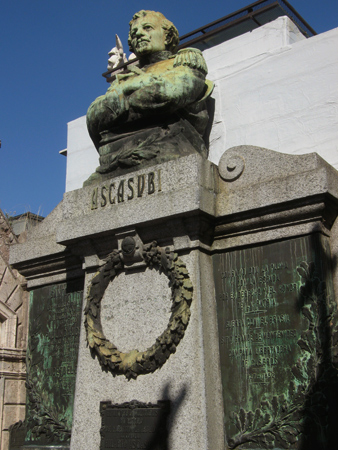
Hilario Ascasubi, Recoleta Cemetery

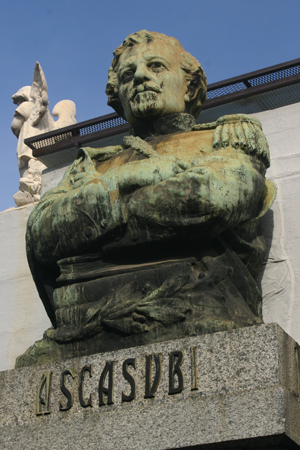
The fabulous life of the gaucho poet Hilario Ascasubi seems to have come directly from the pen of a 19th-century Romantic writer.

The story goes that Ascasubi was born in Córdoba in 1807 aboard a covered wagon. At the age of 5, he rode alongside the then Coronel José de San Martín. And when he turned 14, on a whim Hilario embarked on “La Rosa Argentina” & sailed for over two years around the world.

In 1825, he enlisted as a recruit in General José María Paz’s forces to fight against the Spanish. It was there where Ascasubi began to compose verses to entertain his companions. Shortly after, he met Facundo Quiroga in Tucumán.

Hilario Ascasubi, Recoleta Cemetery

When Rosas came to power, Ascasubi wrote satires against the “Restorer” which got him two years in prison. After his release, he lived in exile in Montevideo for the next two decades… the time when his literary expertise would make him famous. Ascasubi returned to Buenos Aires in 1852, & the following year edited the satirical newspaper “Aniceto el Gallo.” A few years later he spent almost his entire fortune in building the first Teatro Colón on Plaza de Mayo.

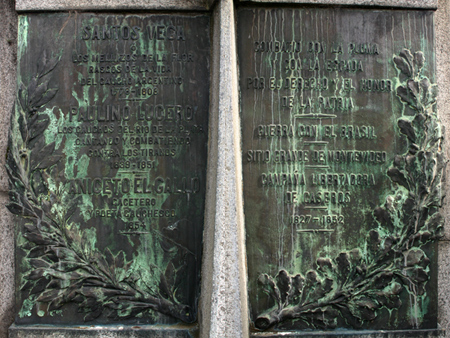
In 1872, his complete works were published in Paris & “Santos Vega” appeared for the first time —about a storyteller who defies the Devil himself & is regarded as one of the best works of Latin American literature. In Recoleta Cemetery, his most recognized works are listed on the left side of the tomb while his military actions are named on the right:

Hilario Ascasubi, Recoleta Cemetery

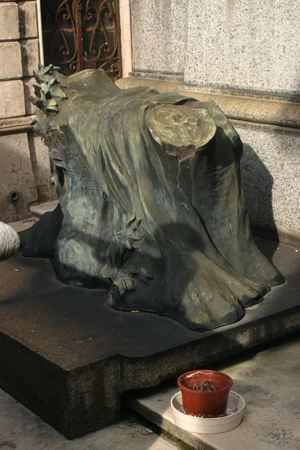
Ascasubi —friend of Sarmiento, Florencio Varela, & Valentín Alsina— passed away in Buenos Aires in 1875. His crypt was declared a National Historic Monument in 1946. The tree stump is unique to the cemetery… a symbol of death of something which once lived, something which can never be recovered:

Hilario Ascasubi, Recoleta Cemetery

2 Comments

388. rain damage

Entrance gate rain damage, Recoleta Cemetery

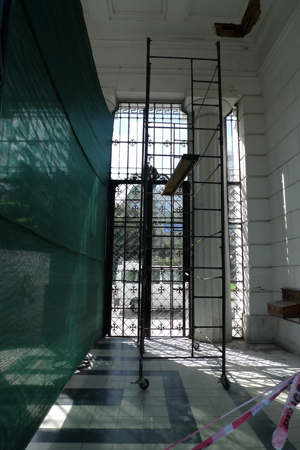
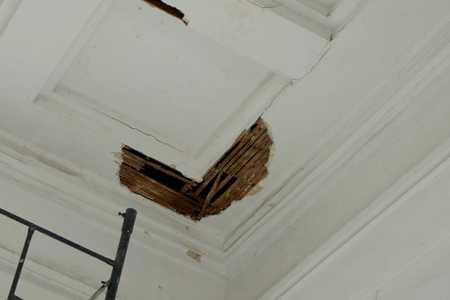
Due to heavy rains in Buenos Aires over the past week—the city received more than a normal month’s rainfall in just a few days—the entrance gate to Recoleta Cemetery suffered serious damage. Large portions of stucco crashed down last Saturday, & city engineers were on site Monday to figure out a course of repair.

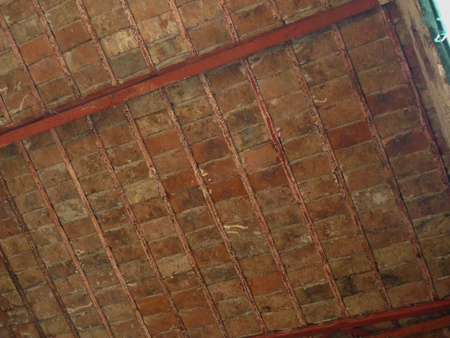
Surprisingly enough, the ceiling is not made of brick like most buildings in Buenos Aires but merely a hollow, wooden frame. Architect Buschiazzo’s budget must have been tight in 1881:

Entrance gate rain damage, Recoleta Cemetery

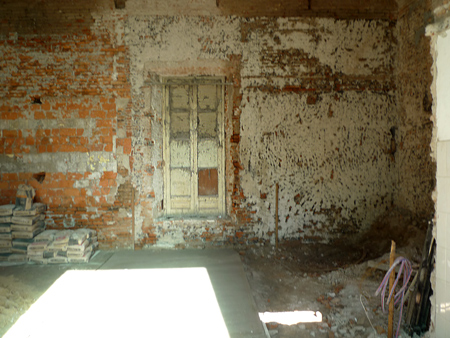
Update (06 Mar 2010): It seems like city officials are taking advantage of the damage in order to make other improvements. The women’s restroom is currently gutted… perhaps a new one is on the way. For the moment, the men’s restroom is for the ladies. This is probably the only time to see the ceiling structure:

Entrance gate, former women's restroom, Recoleta Cemetery

Entrance gate, former women's restroom, Recoleta Cemetery

2 Comments

387. sánchez de mendeville

María Sánchez de Mendeville, Recoleta Cemetery

As the only heir to her family’s fortune, María Josepha Patrona de Todos los Santos Sánchez de Velasco Trillo —Mariquita, for short— would have been a bride many sought after. But Mariquita, born in 1786, lived during the Spanish Viceroyalty & arranged marriages were commonplace among the upper class. Her fate was sealed. Unfortunately she had already fallen in love with her first cousin, Martín Thompson. To discourage the couple, Mariquita was confined inside the Santa Casa de los Ejercicios Espirituales for her own good:

Santa Casa de Ejercicios Espirituales, Constitución

Santa Casa de los Ejercicios Espirituales, Constitución

It didn’t work… Martín used to enter secretly & visit Mariquita. Eventually they both pleaded with the Vicerroy to annul the arranged marriage, & the couple happily married in 1805. Five children later, Martín was sent on a diplomatic mission to the US & died soon after his return.

Mariquita Sánchez de Thompson did not remain single for long. She soon married the French embassador, Jean Baptiste Washington de Mendeville. Although the couple had three children, the marriage was not a happy one. With divorce illegal, their only recourse was separation. Mendeville left Buenos Aires & never returned.

During the government of Rosas, Mariquita Sánchez de Mendeville lived in exile in Montevideo. After the defeat of Rosas & returning to Buenos Aires, she worked tirelessly for the largest benefit organization in the city & even came to know President Sarmiento. Mariquita was always involved in politics. In fact, history credits her as being one of the first people to hear the Argentine national anthem written by Vicente López y Planes in 1813… performed at her home on Calle Florida. Mariquita passed away at the age of 82 in 1868.

María Sánchez de Mendeville, Recoleta Cemetery

Someone else is buried in Recoleta Cemetery with Mariquita. With strong connections to France thanks to her last husband, she was named godmother of Isabelle Colonna-Walewski, granddaughter of Napoleón Bonaparte. Born in Buenos Aires in 1847, Isabel only lived 50 days. Latin on the tombstone sums up Mariquita’s life: “She loved charity.”

Her crypt was declared a National Historic Monument in 1946.

4 Comments