Skip to content

Category: Art + Architecture

585. ossorio arana ◊

Born in the western outskirts of Buenos Aires in 1902, Arturo Ossorio Arana embarked on a military career that would lead him to participate in several military coups. Staunchly anti-peronista, he would also be complicit in hiding Eva Perón’s embalmed corpse… proof that friends & enemies rest side by side in Recoleta Cemetery.

In 1951, the Minister of the Army blamed Ossorio Arana for leading a group of young officers in a revolt against the Perón government. Relieved from duty, he tried to oust Perón again in 1955 with help from Pedro Aramburu & Eduardo Lonardi. Resulting civilian casualties were high after rogue military planes bombed Plaza de Mayo. However, Perón had been tipped off & took refuge in army headquarters just in time. A few months later, the military finally succeeded in taking control & attempted to wipe all traces of Peronism from Argentina.

As part of that plan, Ossorio Arana held the deceased Eva Perón captive for a while… but you’ll have to get the map/guidebook for that story! In the end, Ossorio Arana was more known for re-establishing martial law as Commander-in-Chief under Aramburu’s de facto presidency. In 1956, he gave permission to execute by firing squad a group of young people who had opposed the military government. Seven of 12 people shot would survive & later become immortalized in Rodolfo Walsh’s Operación Massacre.
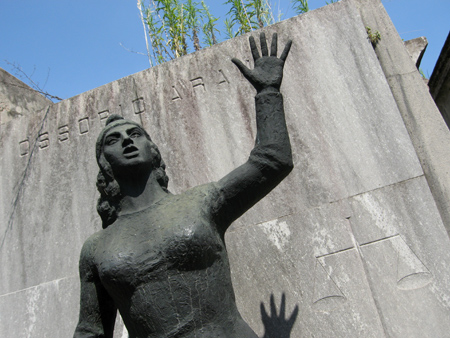
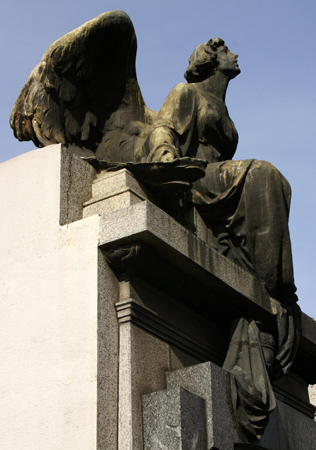
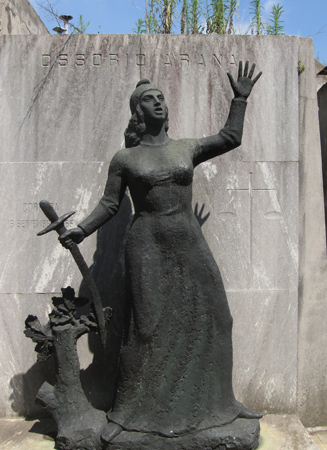
The tomb of Ossorio Arana is striking with its gigantic, oversized statue of Argentina. A brilliant work by sculptor José Fioravanti, she represents Liberty with her sword ready for action. Ossorio Arana died in Buenos Aires in 1967, but the place & date on his tomb —Córdoba, 16 Sep 1955— correspond to the revolution that forced Perón to flee Argentina. Engraved scales represent Ossorio Arana’s belief in military justice.

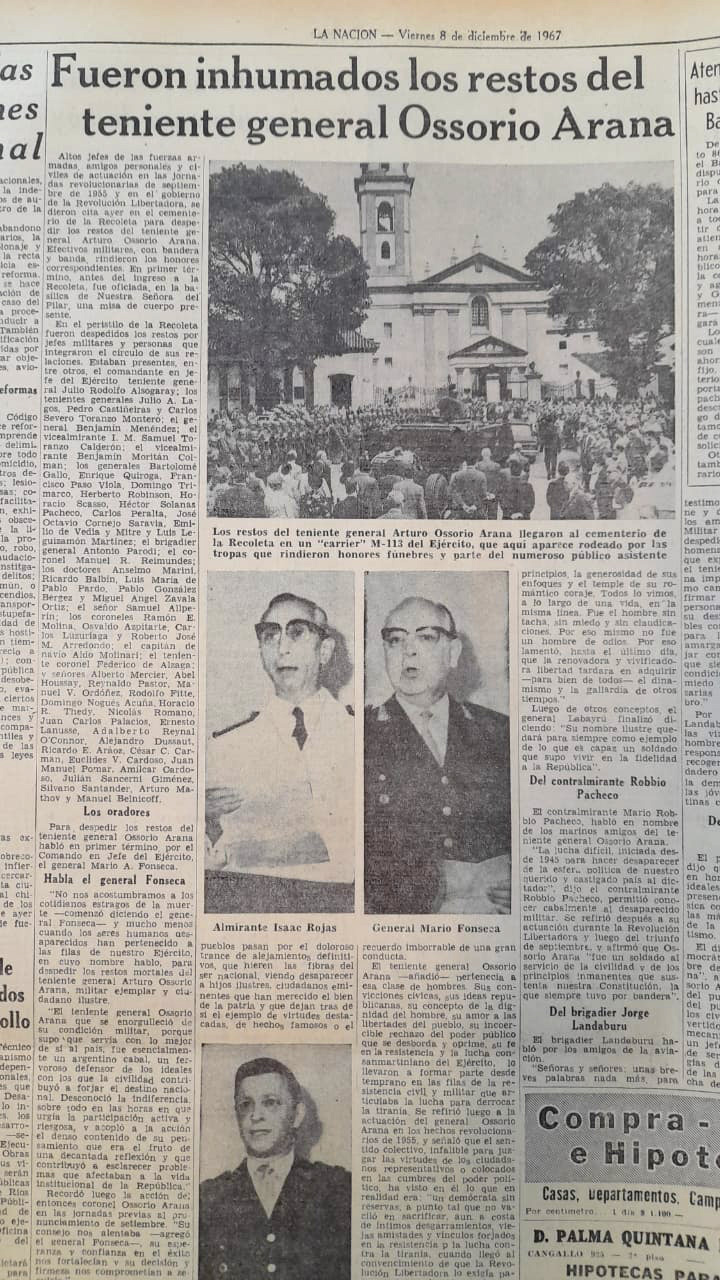
His funeral drew a large crowd, with a multitude of military speakers & a large escort. La Nación reported that a couple people were arrested for public disturbance… one even shouting “Long live democracy!” Big thanks to Nicolás Colombo for sending us the images below… he runs the Misterios de La Plata blog & Facebook group.
Given his control over national affairs, memorials (like the one shown below) were common for several years after Ossorio Arana’s death. On the first anniversary, former President Aramburu gave a speech that was later engraved on the left side of the tomb:

“…If you fear the risks of Liberty, If you find safety in the obedience that despots impose… Do not stand before the tomb of this soldier!”
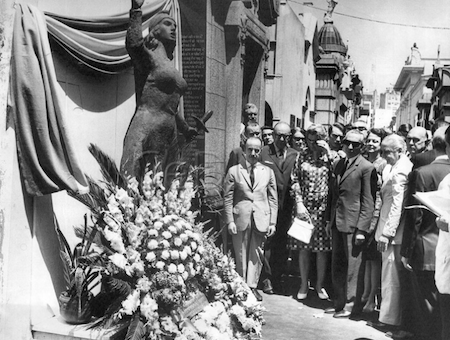
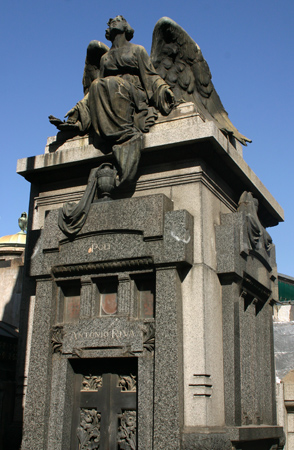
Image courtesy of the Centro de Documentación e Investigación de la Cultura de Izquierdas, 1972.
Leave a Comment

584. poli – antonio riva

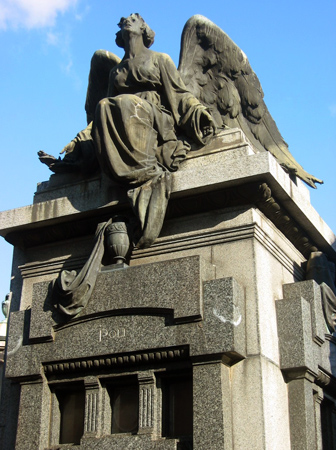
What a stunning statue of an angel gazing towards the heavens by Luigi Trinchero. Invited to Argentina by fellow Italian artist Victor de Pol in 1889, Trinchero directed a ceramics factory in La Plata that ultimately did not succeed. Soon after its closure, he returned to Italy.

However, Trinchero came back to Argentina at the insistence of Carlos Morra & this time would succeed. He established a workshop to produce ornamental sculpture… exactly what Buenos Aires needed as many aristocratic porteños rekindled their European origins & a building boom began. Trinchero decorated the Centro Naval, churches, schools & most famously the Teatro Colón.

A descendant of Antonio Riva has generously shared his family history with us. A portion of his comment is copied here. Thanks, Agustín!

Antonio Riva, whose name is featured on top of the mausoleum’s door is my great great grandfather. He was a wealthy Genovese born (who came to Argentina maybe in the 1860s) importer and salesman of food stocks in the late 19th and the early 20th century. He probably commissioned the sculpture from Trinchero at the same time the sculptor was famous for doing work in the Teatro Colon in Buenos Aires. The rest of the mausoleum was most likely built by other Italian workers who more or less made these in series, albeit really well. Antonio Riva’s daughter, Emma Riva, who was fond of art and Italian artists – sponsoring painters such as Angel Della Valle – was maybe involved in picking the sculptor for the mausoleum. Emma Riva married Giulio Poli, and that is why the surname Poli was added. 

5 Comments

581. lorenzo fernández de viana

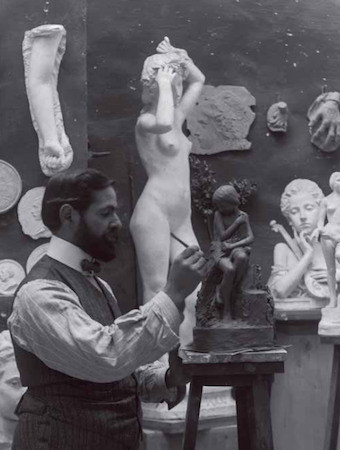
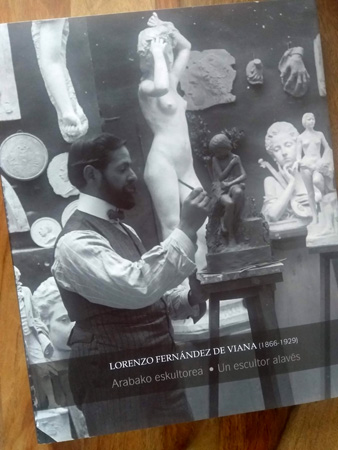
Lorenzo Fernández de Viana, Museo de Bellas Artes, Álava

Born in 1866 in Lanciego —a small town in the southern Basque region of Álava, near the border with La Rioja— Lorenzo Fernández de Viana began his artistic career as a cabinet maker… but soon moved on to bigger & better things. After obtaining grants to study in Madrid & Paris, he returned to the local capital of Vitoria to open the only sculpture workshop in the city. As a result, his art decorates the new cathedral & he even taught aspiring students.

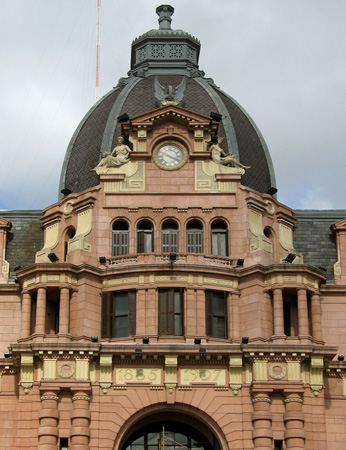
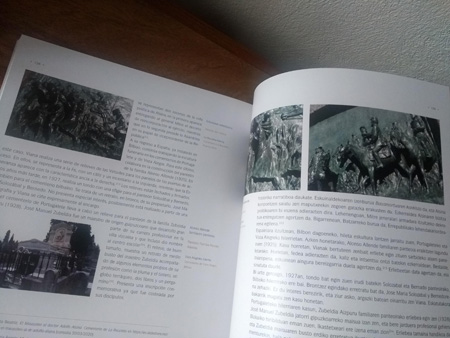
Viana left it all for Argentina in 1912, accompanied by his three daughters. His timing could not have been more perfect, with Argentina booming & numerous cities requesting European artists to decorate the nation. Viana’s stay in America was brief, but he left behind works in Mar de Plata & Buenos Aires. Gaze up to the Constitución train station to find representations of Agriculture & Commerce… fitting since this was the gateway to the Pampas (photo below). On their return to the Basque Country in 1916, his family moved to Bilbao where Viana passed away ten years later in 1926.

Buenos Aires, Constitución, estación de tren, train station

During the height of the pandemic, the Museum of Fine Arts in Álava found this blog & requested to use photos from the tomb of Adolfo Alsina in an upcoming exhibition. Viana was responsible for several reliefs depicting scenes from Alsina’s life. Always happy to assist, I was pleased to contribute & receive a catalog. If you’re in Vitoria, visit the free exhibition because they’ve done a wonderful job in rescuing the memory of such a great artist (runs until 20 Mar 2022).

Lorenzo Fernández de Viana, Museo de Bellas Artes, Álava
Leave a Comment

578. peirano

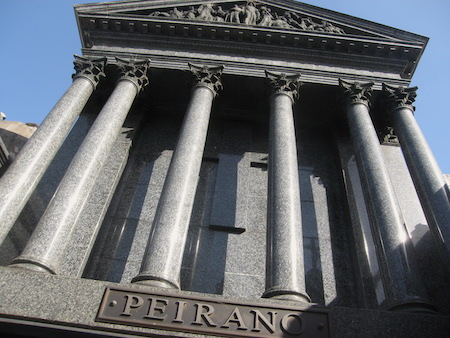
Recoleta Cemetery, Buenos Aires, Peirano, Troiano Troiani

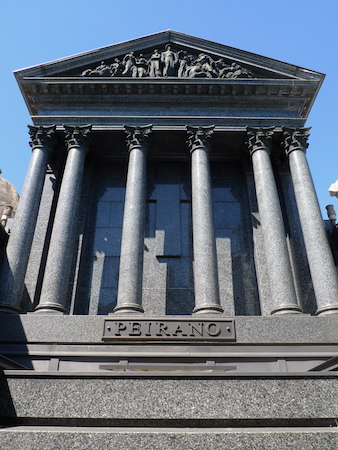
Signed by Italian architect Aldo Antonio Gaetano Flándoli, this striking Roman temple replica fails to attract much attention from visitors due to its location: a small walkway off a main path. The grandeur is also difficult to appreciate in such tight quarters but fortunately we have some artwork at eye level to appreciate.

Recoleta Cemetery, Buenos Aires, Peirano, Troiano Troiani

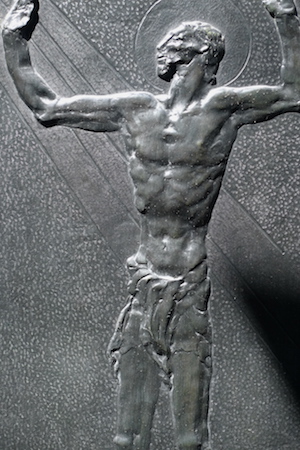
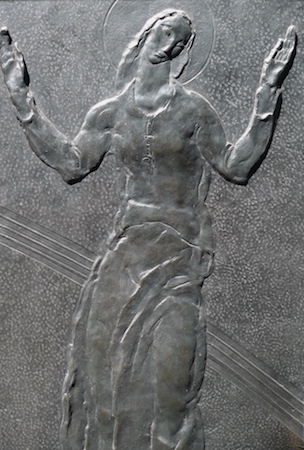
Statues in the triangular pediment above as well as two door reliefs below are signed by another Italian immigrant, Troiano Troiani. The four Evangelists —Mark, Luke, John & Matthew— with their corresponding symbols flank larger depictions of Jesus & Mary. The descent of Christ from the cross is also shown in a lower center relief. Other works by Troiani in Recoleta Cemetery include a massive statue topping the Familia Manuel Cerini tomb as well as sculptures for the Familia D’onofrio. These are no less spectacular:

Recoleta Cemetery, Buenos Aires, Peirano, Troiano Troiani

My main question is who are the Peiranos & how did they afford such a luxurious final resting place? Instinct leads me to believe they are part of the Uruguay-based Peirano family, known for owning a huge number of businesses in South America including banks, public transportation plus supermarket chains Santa Isabel in Chile & Disco in Argentina (often gathered under the Grupo Velox brand). Uruguayan courts found three of four Peirano brothers guilty of money laundering & fraud in 2013… but are their relatives here in Buenos Aires?

The only plaque on the mausoleum lists four burials from the mid-20th century, with no trace of anyone on the internet. If you have information about Elitreo Strucchi, Margarita D’Abové de Peirano, Antonio Peirano or Luisa Subazzoli de Strucchi —or any of the Peiranos— please let us know!

Leave a Comment

545. arrigorria

Buenos Aires, Recoleta Cemetery, Arbigorria

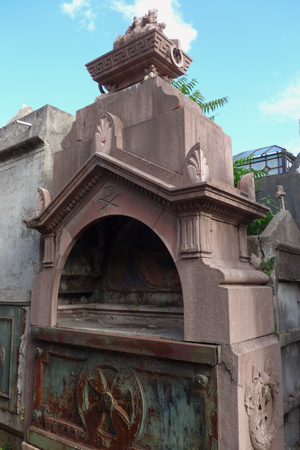
Our best guess as to the fortune of this family is based on references to Arturo R. Arrigorria in city government bulletins as well as annals of the Sociedad Científica Argentina: co-founder of the “La Nacional” glass factory in 1876 along with an associate with the last name of Pini. A visit by the SCA mentions 40-50 workers at their Buenos Aires plant, using two tons of coal to make 2,000 pounds of glassware daily. While they’ve obviously stopped paying maintenance fees & we’re not 100% certain of their identity, the vault is too unique not to mention here.

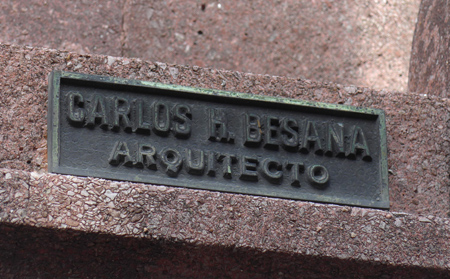
This pink-hued masterpiece off the tourist circuit offers one clue: a rare plaque by its architect, Carlos H. Besana. With a studio on Calle Tucumán just off Avenida Callao, Besana inherited a successful construction & architecture firm from his father, Pablo Besana. Pablo began his career in Milan & his native Lake Como, arriving in Buenos Aires in 1878. He collaborated with other major architects in the construction of some of the capital’s iconic buildings such as the first Facultad de Medicina on Avenida Córdoba & the national Congress. Around 1916, the firm acquired the name Besana & son.

Buenos Aires, Recoleta Cemetery, Arbigorria, Carlos H. Besana

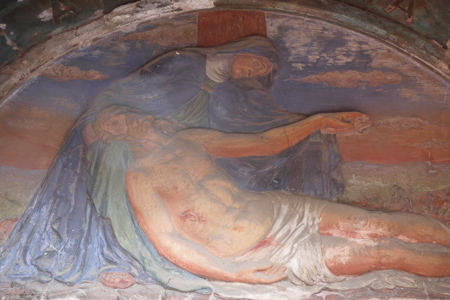
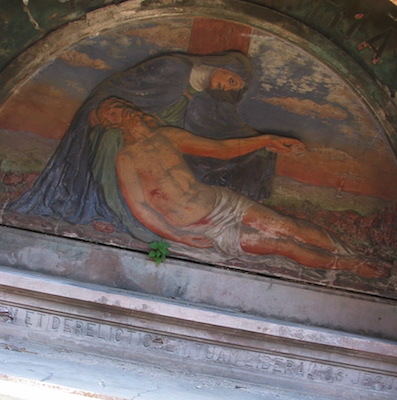
Another splash of color decorates a recess in the vault… a painted Pietà image. Such colorful images are rare in Recoleta Cemetery, often only found in stained glass panels:

Buenos Aires, Recoleta Cemetery, Arbigorria

Latin script at the base of the Pietà is credited to St. Francis de Sales, a bishop from Savoy. Per crucem et derelictionem tuam, libera nos, Jesus translates to “By your cross & passion, deliver us, Jesus” & is often used in prayers:

If anyone has biographical information on the Arrigorria family, let us know & we will include it here. In the meantime, seek out this bit of color inside the cemetery!

3 Comments