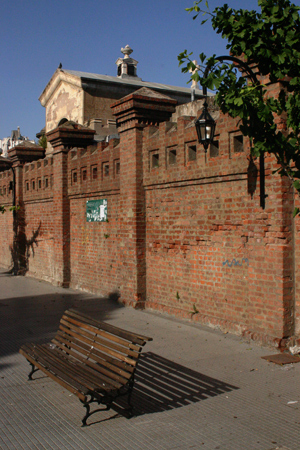
With gingko trees growing for the last two years, a new sidewalk & benches, the exterior of Recoleta Cemetery looks the best it has in ten years… in spite of destroying the entrance gate staircase.
Leave a Comment
With gingko trees growing for the last two years, a new sidewalk & benches, the exterior of Recoleta Cemetery looks the best it has in ten years… in spite of destroying the entrance gate staircase.
Leave a Comment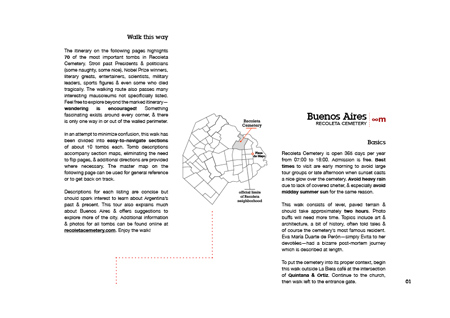
Take this blog with you! Several years, thousands of photos & 24 pages later, the only guidebook to Recoleta Cemetery which can be easily used inside is available for purchase.
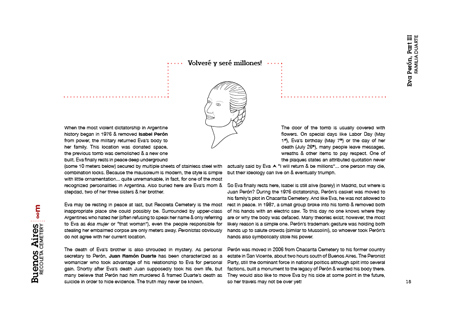
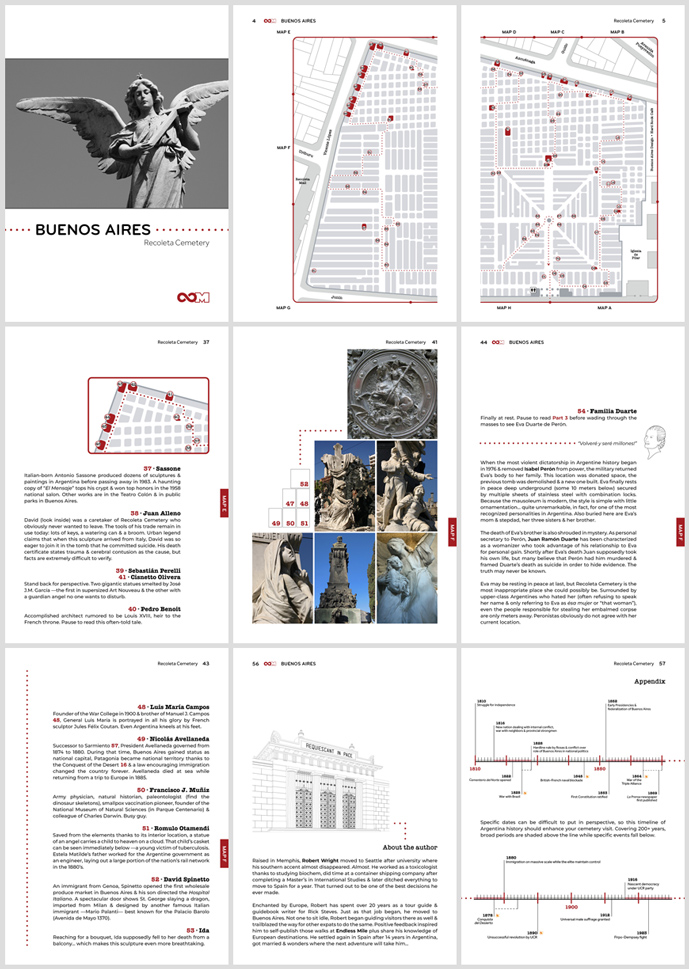
The PDF has a clean & crisp look, designed to be printed either at home or while in Buenos Aires. It covers 70 tombs & mausoleums, divided into easy-to-navigate sections of about 10 tombs each. In addition, there are sections which discuss the foundation of the cemetery, its current operation, some of the symbolism to be found inside, & a full-page master map… in fact, it is the only accurate map in existence.
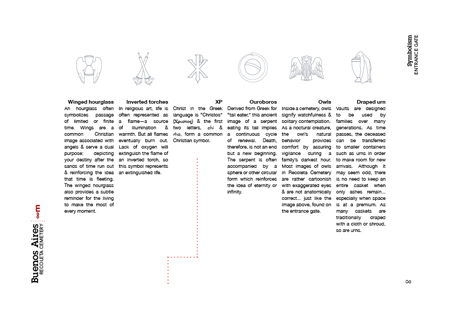
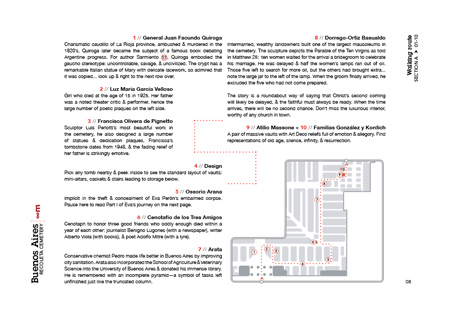
The walk focuses on art & architecture, a number of important historical events, a bit of urban legend & of course the cemetery’s most famous resident. Eva María Duarte de Perón —simply Evita to her devotées— had a bizarre post-mortem journey which is described at length. The entire walk should take about two hours to complete… keep in mind that the PDF is directed to those who want to explore the cemetery in depth.
Purchase from PayPal for US$ 5.99 on the dedicated sale page. A download link will appear after the sale has been approved. Thanks for supporting our research!
To learn about the making of this guide, the following series of posts titled “map development” chronicles the journey: part 1, part 2, part 3, part 4, part 5, part 6, & part 7.
Update (Jul 2020): The COVID-19 pandemic has had at least one positive result: time to redesign the entire PDF guide to Recoleta Cemetery. New sections & dozens of color photos were added, but the price remains the same. Check it out!
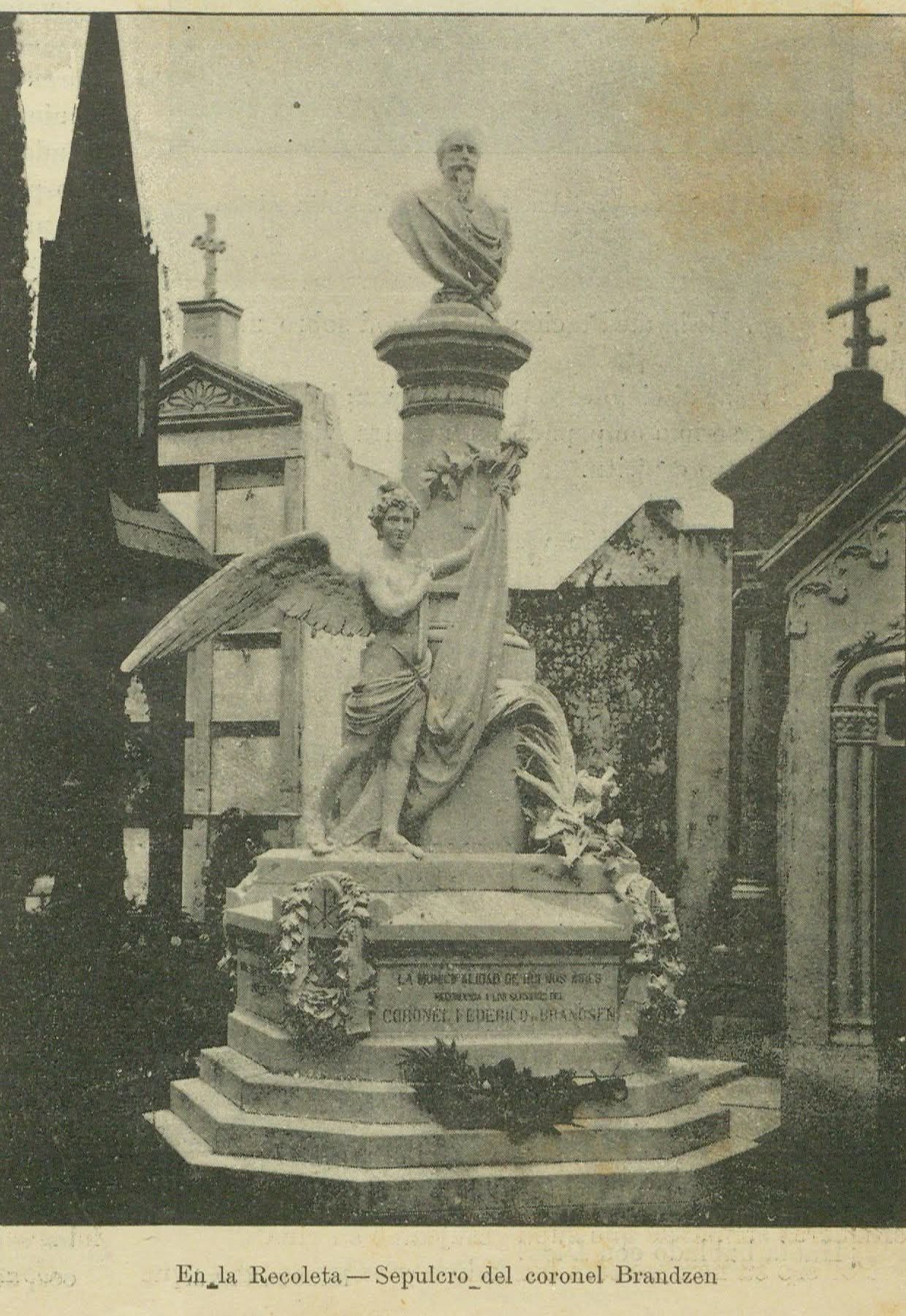

The angel has unfortunately lost its wings due to encroaching neighbors, but this continues to be one of the most striking monuments in Recoleta Cemetery.
Leave a Comment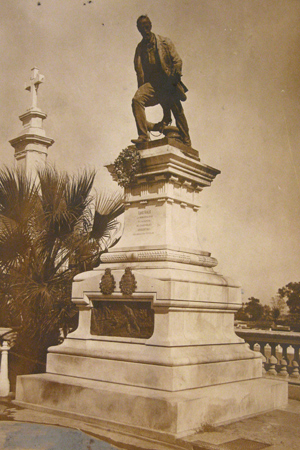
A cenotaph to Luis Viale proudly sat in Recoleta Cemetery but has since been moved. An Italian immigrant dedicated to business & banking, Viale was best known for his acts of bravery & selfless courage. The last life he saved was during the 1871 sinking of the U.S. paddle steamer “America” off the coast of Montevideo after sailing from Buenos Aires. Seeing friend Carmen Piñedo de Marcó del Pont —pregnant & without a lifebuoy— Viale gave his own away… & later drowned along with 140 other passengers.
Paid for by public subscription, the statue by Italian sculptor Odoardo Tabacchi occupied a prominent location along the back wall of the cemetery from 1893 to 1928. After several changes of location & now called the “Monumento a Luis Viale,” the statue can be found in Costanera Sur, dwarfed by neighboring highrises of Puerto Madero:
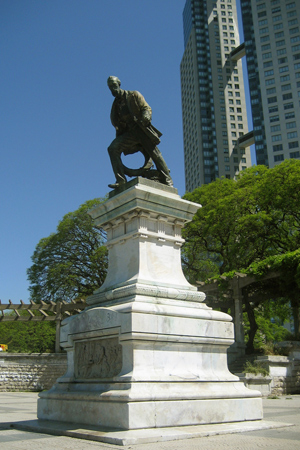
As a sidenote, the great-grandson of the unborn child saved by Viale is Horacio Rodríguez Larreta, mayor of Buenos Aires from 2015 to 2023.
Update (30 Nov 2025): We don’t have the source or date for the following photograph, but it’s too interesting not to post… apparently showing the construction & placement of the cenotaph in 1893. Any data concerning this image’s origin is appreciated.
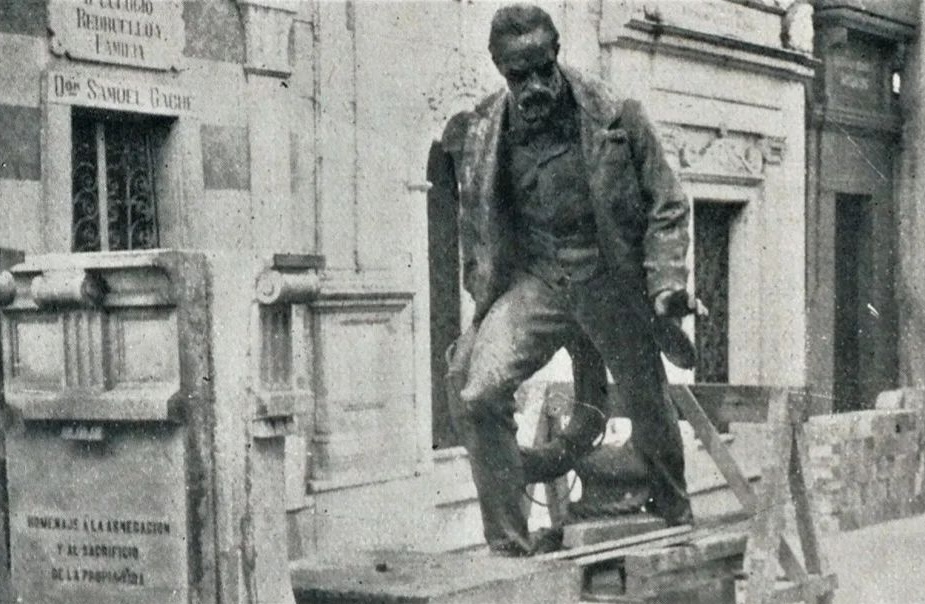
Top photo courtesy of the Archivo General de la Nación. Second photo courtesy of Gabriel Arango.
6 Comments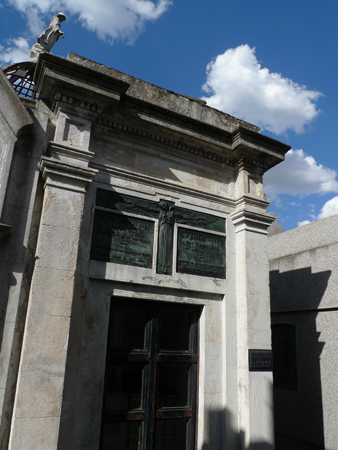
Such a diverse family deserves lots of photos… especially since few people ever visit this tomb & not one of the more remarkable structures in the cemetery, surprisingly since a talented architect rests in peace here:
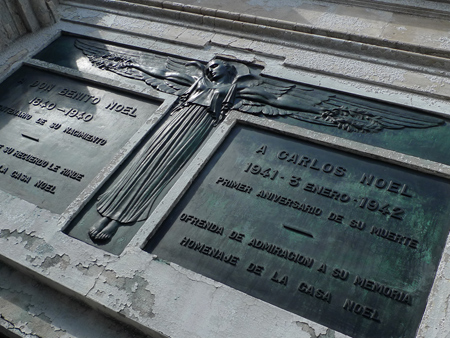
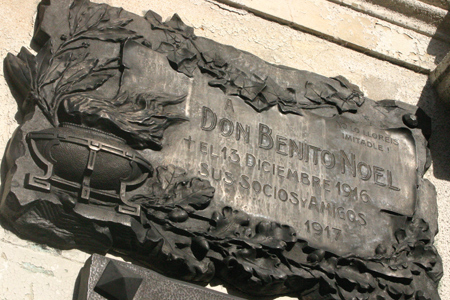
The Noel family arrived in Argentina from the Basque Country in the mid-1800’s. Benito began producing sweets & had immediate success. The company logo played off the family name & its association with Christmas. Benito passed away in 1916, but his children would continue the family business & become famous in other areas. A plaque for Benito reminds the visitor, “Don’t cry for him, imitate him”:
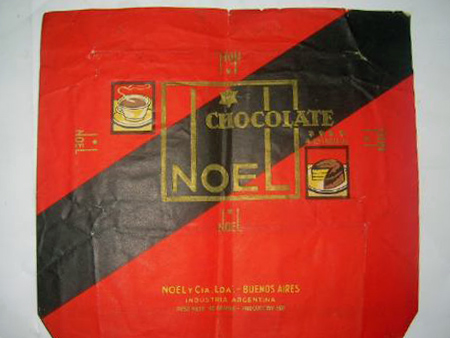
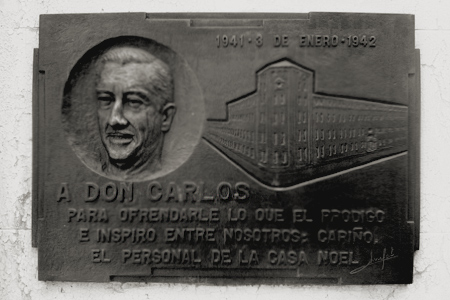
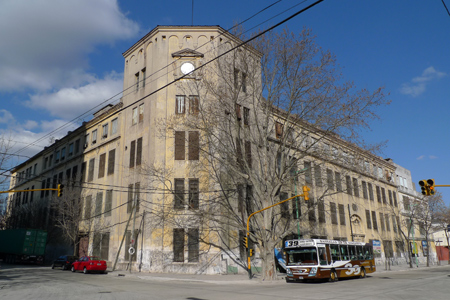
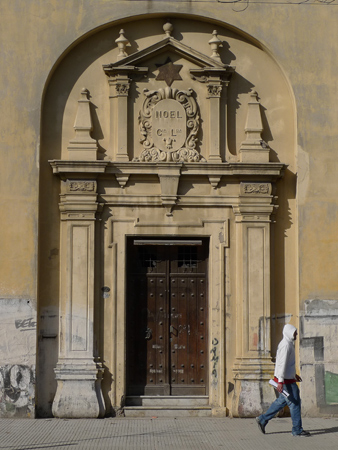
One son, Carlos Noel, managed the chocolate factory located in La Boca. Although recently sold, the building is still standing on Avenida Regimiento de Patricios. However, Carlos is probably best remembered as mayor of Buenos Aires in the 1920s under President Marcelo T. de Alvear… that’s when the President of Argentina had to pick who ran the capital city. No elections were required, so Noel family connections were obviously very good:
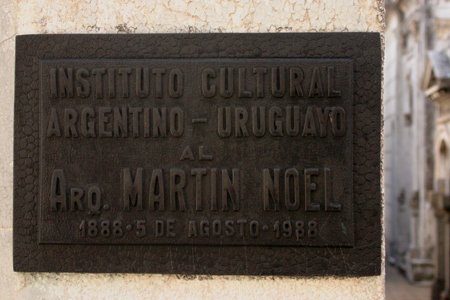
Another son, Martín Noel, became one of the most famous architects of the 1920s & 1930s. He trailblazed a new style of architecture which combined Art Deco with design elements from indigenous American cultures as well as Spanish Colonial forms. Known as NeoPrehispanic, his best example in Buenos Aires is the Museo de Arte Hispanoamericano Fernández Blanco… formerly the family home. Martín also designed the Argentina pavilion for the 1929 Ibero-American Expo pictured below:
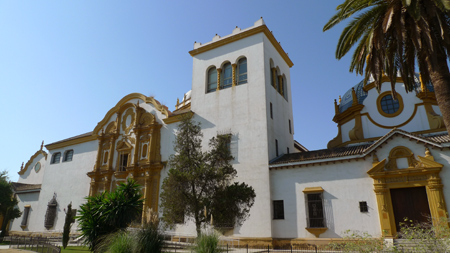
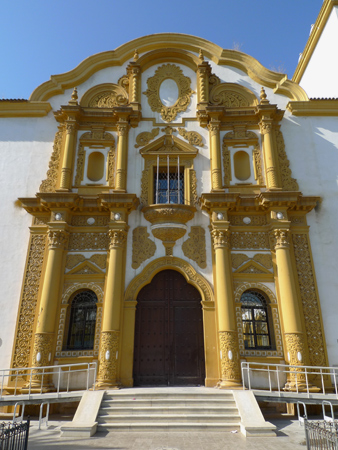
He even designed the decoration on the E Line of the Buenos Aires subway… all tiles depicting different regions of Spain:
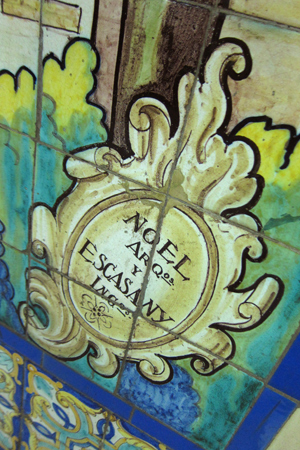
Chocolate Noel succumbed to the wave of privatization in the 1990s in Argentina & was purchased in 1994 by Arcor. While Arcor is an Argentine mega-corporation, the Noel brand was discontinued. Just like Terrabusi’s crackers, Noel chocolate is another Argentine classic gone forever.
7 Comments