Skip to content

Author: Robert

355. alfonsín, finally home ◊

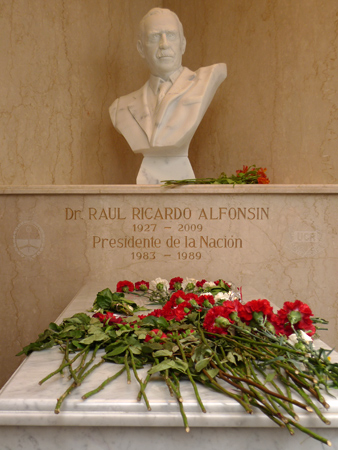
Raúl Alfonsín, Recoleta Cemetery

After the death of ex-President Raúl Alfonsín on March 31st of this year, he was temporarily laid to rest in a pantheon dedicated to victims of the 1890 Revolution. That conflict gave birth to the Unión Cívica Radical, Alfonsín’s political party.

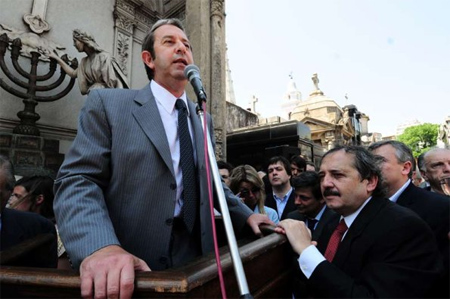
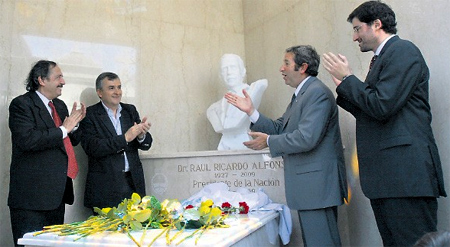
In the meantime, a site previously belonging to French nuns had been purchased for Alfonsín. The old was demolished & the ceremony for the new  took place October 30th, the same day Alfonsín was elected in 1983. A bust of the former President by sculptor Luciano Garbati was officially revealed by family members & leading politicians of the UCR. Vice-President Julio Cobos spoke about political reform as did UCR leader, Gerardo Morales.

Raúl Alfonsín, Recoleta Cemetery

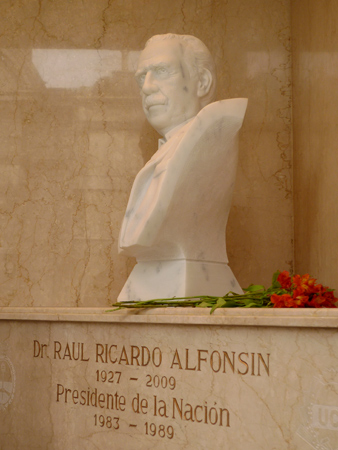
Raúl Alfonsín, Recoleta Cemetery

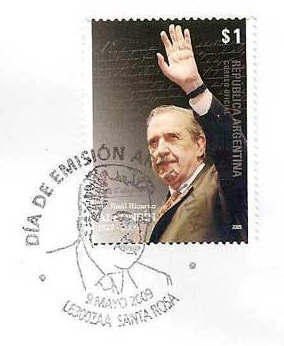
Many people claim that the bust does not resemble Alfonsín, but supposedly the sculptor used an older photograph —therefore a younger image of Alfonsín— as his model. In fact, it is the same image found on a commemorative stamp issued in May.

Raúl Alfonsín, Recoleta Cemetery

Correo Argentino, Alfonsín

Update: In January 2016 Alfonsín’s wife, First Lady María Lorenza Barreneche Iriarte, passed away. She was cremated in Chacarita Cemetery & her ashes brought here to rest in peace.

Press photos above from momento24 & La Nación.

1 Comment

354. in the city of the dead

The Nose

More press for AfterLife… yea!

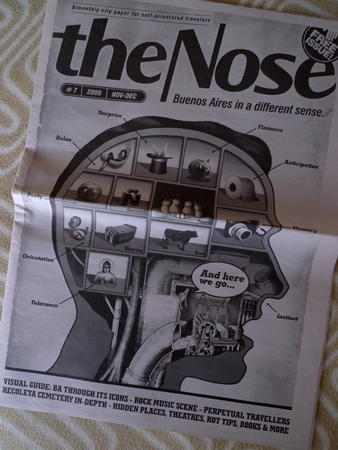
Editor Hernán Cortiñas contacted me & Marcelo a few months ago about an article for the November/December edition of The Nose. It hit the press recently, & we couldn’t be more pleased. The Nose promises to deliver “Buenos Aires in a different sense” & they certainly do.

As a free bi-monthly publication in tabloid format, issues focus on explaining more than just BA basics, give visitors insider tips not found in any guidebook, & present it all with a fantastic, modern design. Be sure to grab a copy & learn something new about the city.

Below are a couple pics from the current issue, including the article about Recoleta Cemetery:

The Nose

The Nose

Leave a Comment

353. familia del valle

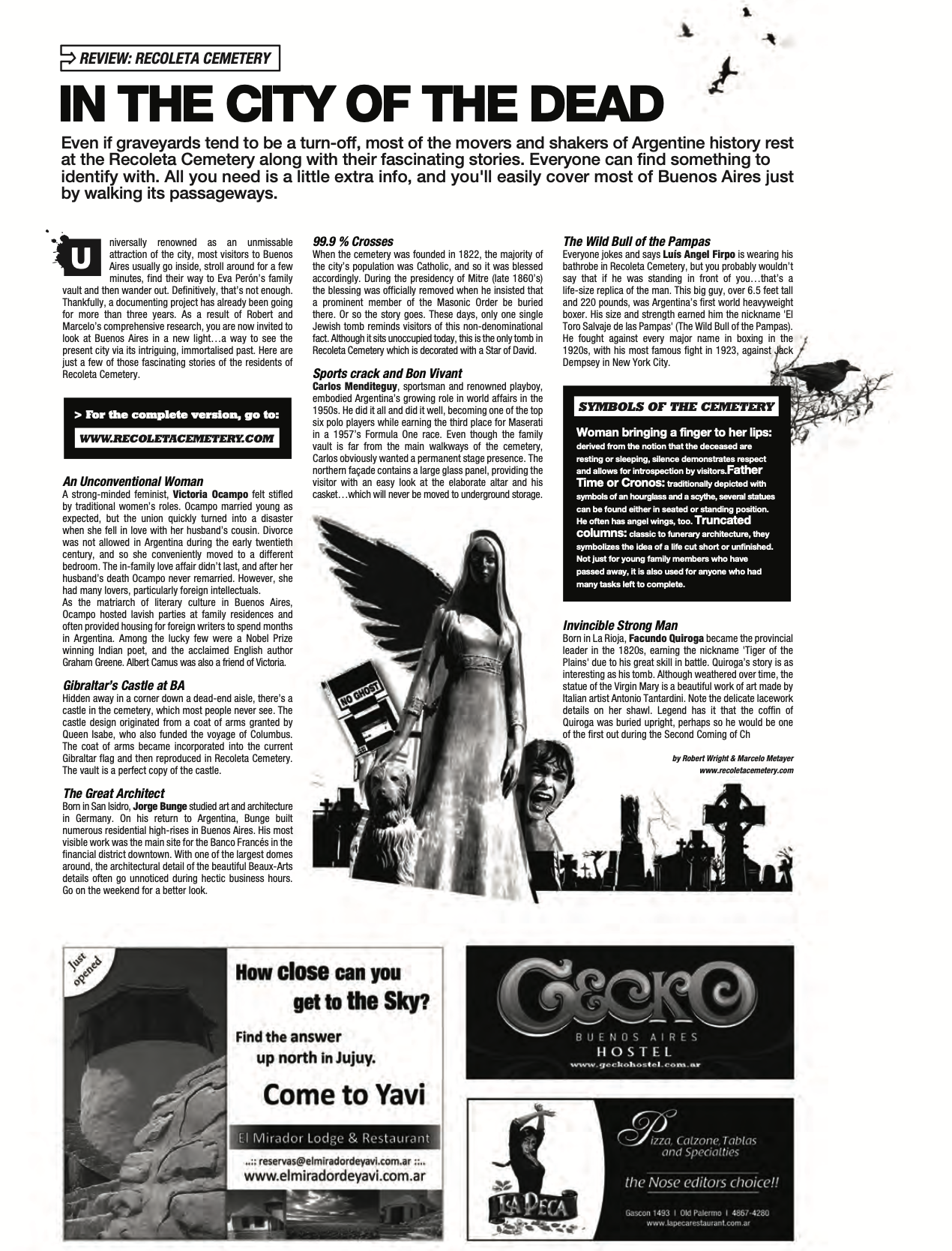
Familia del Valle, Recoleta Cemetery

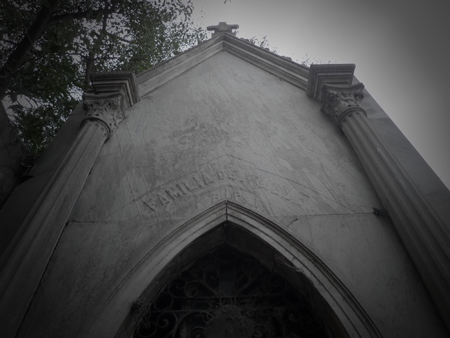
Although neglected today, the Familia del Valle tomb is the final resting place of one of Argentina’s most important sculptors 100 years ago, Victor de Pol. He’s here because in 1910 de Pol married Asimilda del Valle… great-niece of politician Aristóbulo del Valle.

Victor de Pol, Recoleta Cemetery

Born in Venice in 1865, Victor de Pol emigrated to Argentina in 1887 at the age of 22. Having already studied art in his home town, Florence & Rome, de Pol won several awards & was recommended personally by his last teacher, Giulio Monteverde… responsible for the crucifixion statue in the cemetery chapel & professor to Dolores “Lola” Mora.

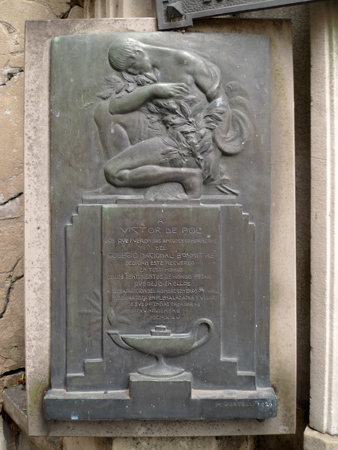
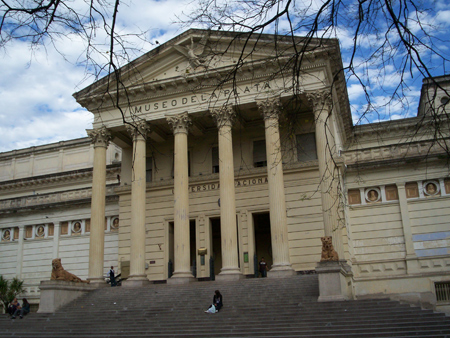
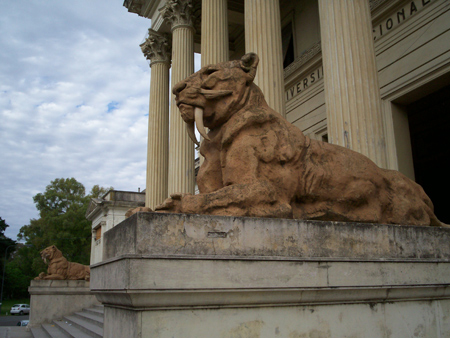
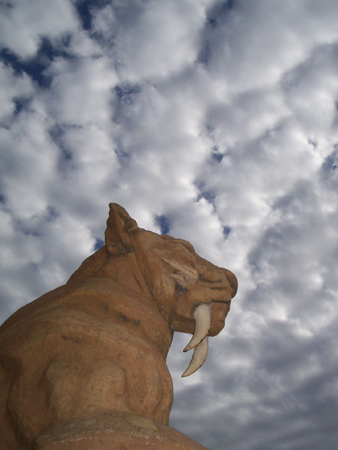
The city of La Plata —newly founded capital of the Provincia de Buenos Aires— hired de Pol to add a little beauty to Pedro Benoit‘s elegant urban design. De Pol is responsible for figures on the Palacio Legislativo, a few reliefs, sculptures of the indigenous people held captive in the Natural History museum (!), busts of 12 important scientists & the saber-toothed tigers guarding the museum entrance:

Museo, La Plata

Museo, La Plata

Museo, La Plata

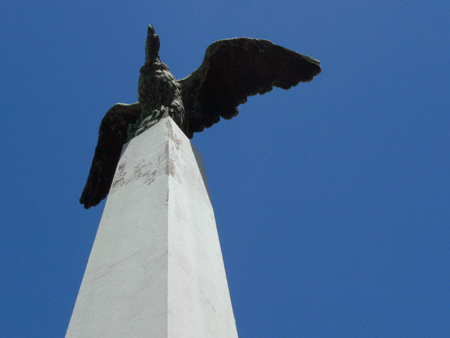
While President Sarmiento was still alive, de Pol had been invited to sculpt a bust —his official image of sorts. So when Sarmiento died in 1888, de Pol was also commissioned to design his tomb in Recoleta Cemetery, topped with a condor:

Domingo Faustino Sarmiento, Recoleta Cemetery

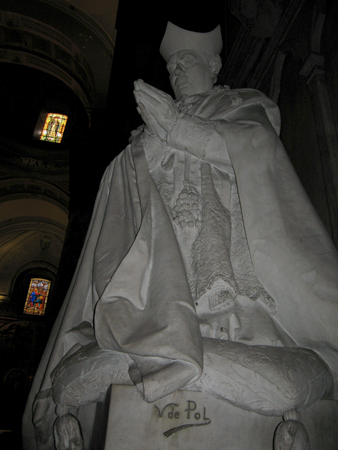
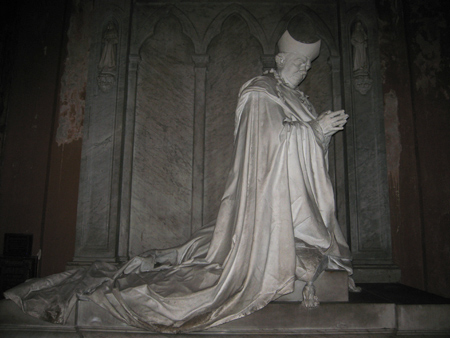
De Pol returned to Buenos Aires after a five-year stay in Europe & opened a studio in what is now known as Galerías Pacífico. From there he designed works to be placed over the entire nation as well as the fantastic tomb of Archbishop León Federico Aneiros, kneeling in prayer in the Catedral Metropolitana:

Catedral Metropolitana, Buenos Aires

Catedral Metropolitana, Buenos Aires

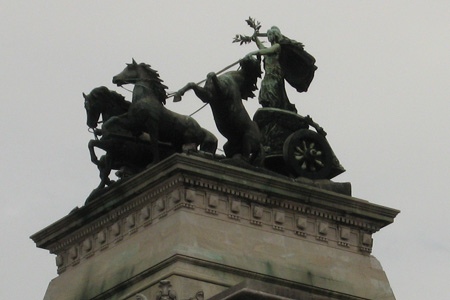
Victor de Pol’s most important work is admired by thousands of people daily, the quadriga placed top & center on the National Congress. Traditionally used by Roman generals when entering a conquered city, the horse-drawn carriage takes on new meaning as Liberty holds the reins. It’s a symbol found everywhere from the Arc de Triomphe to Brandenburg Gate… of course, Buenos Aires needed its own:

Congreso Nacional, Buenos Aires

Museo de La Plata photos courtesy of Marcelo Metayer.

2 Comments

351. sociedade portuguesa de soccorros

Sociedad Portuguesa de Soccorros, Recoleta Cemetery

Beginning with the 1680 foundation of Colonia do Sacramento— situated directly opposite Buenos Aires on the Río de la Plata— Portugal tried to exert certain influence in the region. Although a demarcation line between Spanish & Portuguese territory had been agreed upon in 1494, the two nations often disagreed about the imaginary border. But after the Spanish established a Viceroyalty in 1776 with Buenos Aires as the capital, Portuguese claims gradually diminished.

Immigrant families who remained in Buenos Aires founded the Sociedade Portuguesa de Soccorros in 1895… another self-help organization to assist new arrivals & form bonds with the established community. For a small nation like Portugal, there has always been a large amount of emigration to other places.

Sociedad Portuguesa de Soccorros, Recoleta Cemetery

During the period of the Salazar regime, almost 1.5 million Portuguese left but fewer than 13,000 arrived in Argentina… less than 1% of the total. Most settled in the outer suburbs of Buenos Aires or in the city of Comodoro Rivadavia in Patagonia. The blog of Antonio Antunes Canas (in Spanish) has some interesting stories about his family’s immigration to Argentina, compiles lots of statistics & makes a unique point… because of Argentina’s progressive treatment of immigrants, new arrivals never felt the need to return home or maintain a homestead in Portugal. They were here to stay.

The interior is decorated with a statue of St. Anthony of Padua, born in Lisbon:

Sociedad Portuguesa de Soccorros, Recoleta Cemetery

One plaque of many stands out… Alfonso Afonso was president of the local #60 bus route in the early 1970’s:

Sociedad Portuguesa de Soccorros, Recoleta Cemetery

Leave a Comment