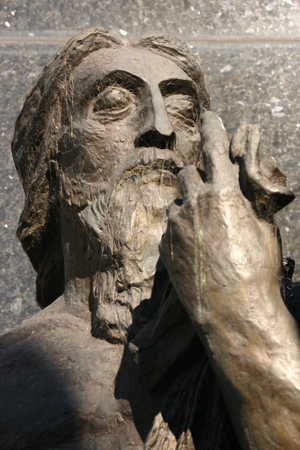
Haunting, modern statue with a plague of constant cobwebs. A similar version of this statue “El Mensaje” greets visitors along the Caminito in La Boca.
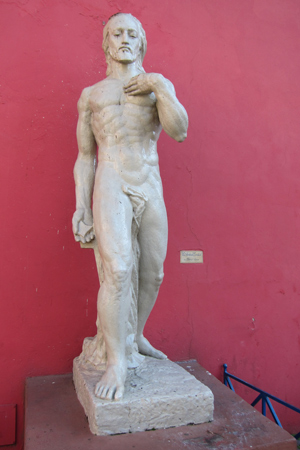
Haunting, modern statue with a plague of constant cobwebs. A similar version of this statue “El Mensaje” greets visitors along the Caminito in La Boca.
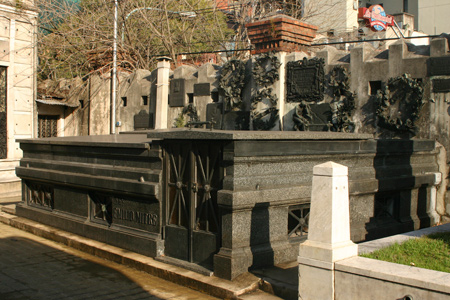
Although participating in a number of political events during the end of the 19th century (most notably the 1890 Revolution), Emilio Mitre chose not to follow the path of his father—President Bartolomé Mitre. Emilio limited his political ambitions to Congress, using his engineering background to improve the nation.
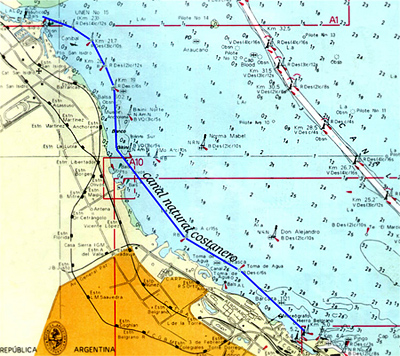
Before being elected senator, Emilio Mitre established telegraph lines & managed the operations of the train service departing from Once in Buenos Aires. Mitre also took over the family business—the La Nación newspaper founded by his father—but probably his most important contribution was supervising the construction of a canal in the Río de la Plata.
In spite of being famous as a port city, Buenos Aires has always had trouble with shipping due to its location. Tons of sediment from the Paraná & Uruguay Rivers finds a cozy home on the sandbars off the coast of Buenos Aires. Large berth ships follow restricted lanes, dredged frequently to be navigable. Mitre realized that cargo coming down the Paraná River needed better access to the port of Buenos Aires, so proposed a new canal. It continues to be used today. There are few nav charts online which clearly shows the buoy-marked canal just off the city shoreline:
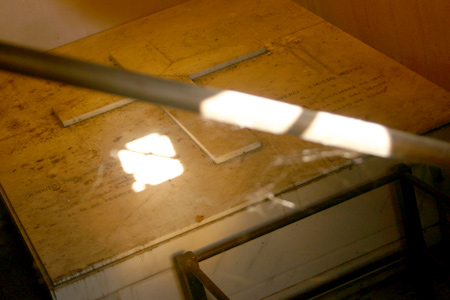
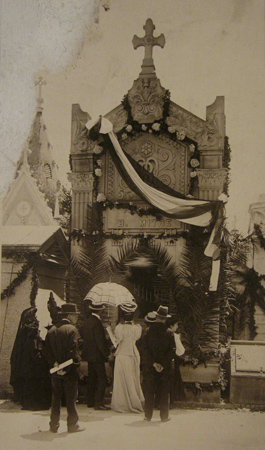
On a non-engineering note, Bartolomé Mitre may be buried here with his son. Maybe. While rummaging through photos at the Archivo General de la Nación, a 1906 photo of Emilio’s tomb had “transfer of Mitre” written on the back:
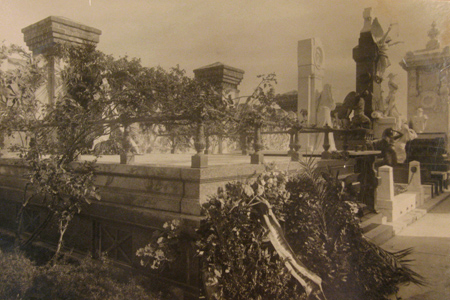
The dates don’t jive though. Emilio died in 1909… three years after the above photo was allegedly taken. Bartolomé’s grand vault was replaced with an equally grand monument in 1938, but the final location of all family members is not clear:
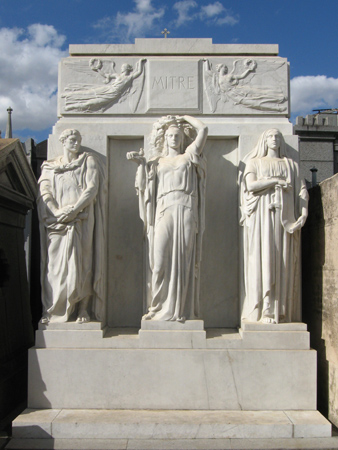
Bartolomé & wife Delfina de Vedia are most likely with their son, but this needs further investigation… surely they wouldn’t be sealed underneath this monument for eternity. Emilio’s vault was declared a National Historic Monument in 1946.
Leave a Comment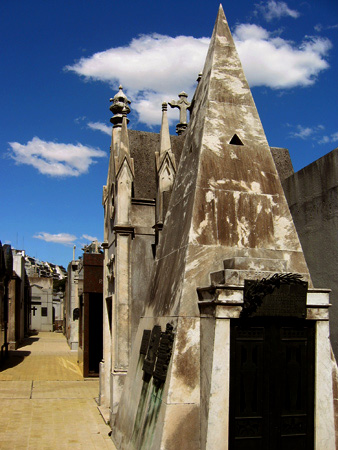
One of the few structures in Recoleta Cemetery shaped like a pyramid & often attributed to Masonic origins, the story of the José Pérez Mendoza is much more interesting than any supposed secret society membership.
Egyptian motifs are likely due to the style of the era—late Art Deco—since Mendoza passed away in 1937. One of the plaques clarifies his contribution to porteño society: founder of the Sarmiento Animal Protection Society:
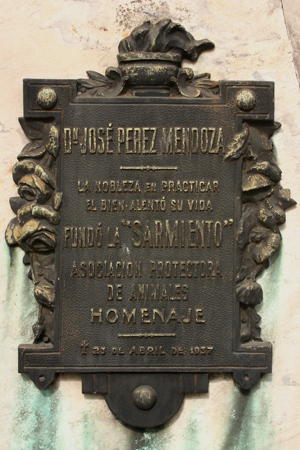
Named after President Sarmiento who supported the first animal rights laws in Argentina, the 1902 society began to care for abandoned & overworked animals. Located on the 600 block of Santiago del Estero, the building is surprisingly still standing… and still operating. The ground floor has been completely altered & now houses a mini-market/garage while the upper floor seems to house the office portion:
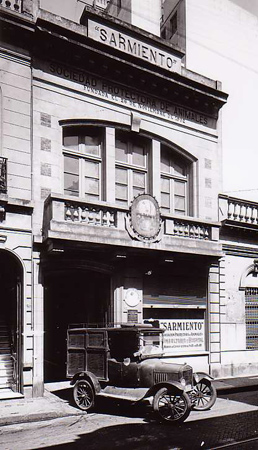
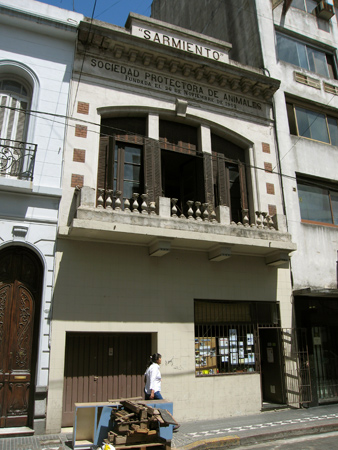
They offer basic services such as education, adoption, spaying, neutering & often collaborate with the School of Veterinary Sciences in the neighborhood of Agronomía.
Update (01 Jan 2025): The Archivo General de la Nación recently posted a video from 1957 with the animal protection society still working! It’s great to see what the interior was once like (Catalog # AGN 626.C35.1.A.1957, used under Creative Commons permission).