Skip to content

Category: History

606. illustrated descriptive argentina

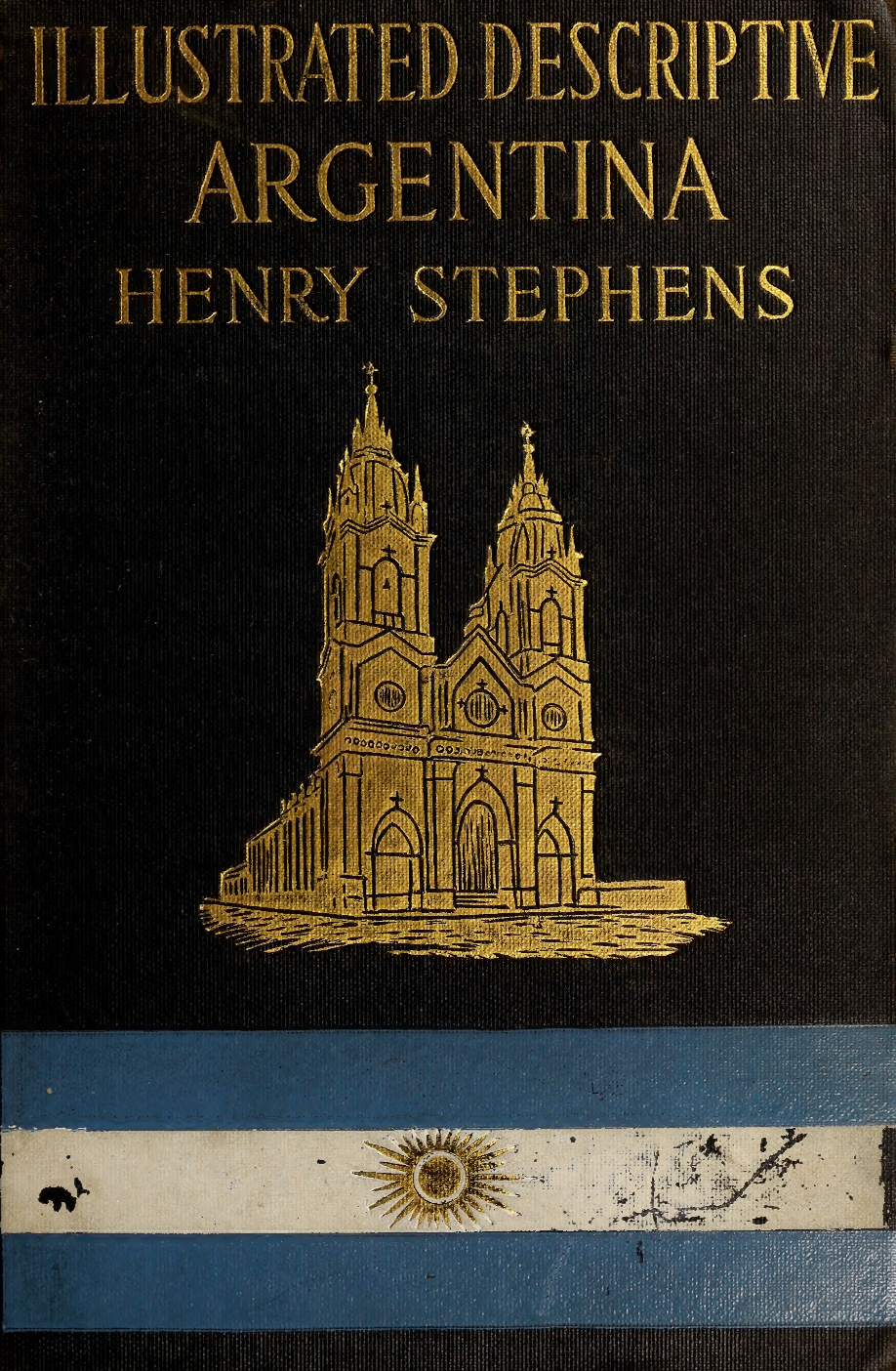
Published in 1917, Illustrated Descriptive Argentina might be perhaps the most literal book title ever conceived. But as explained in the foreward, Henry Stephens considers this the best way to describe Argentina:

An oracular or written description gives a person one impression; illustrations give a different one; but neither alone can convey to the mind a true idea of a place or an object such as can be imbued by the individual who read and studies a descriptive illustration. It is with this idea, therefore, that I have compiled these illustrations, and from a few words to a few paragraphs on each subject have produced “Illustrated Descriptive Argentina,” which I think is the only work of its kind.

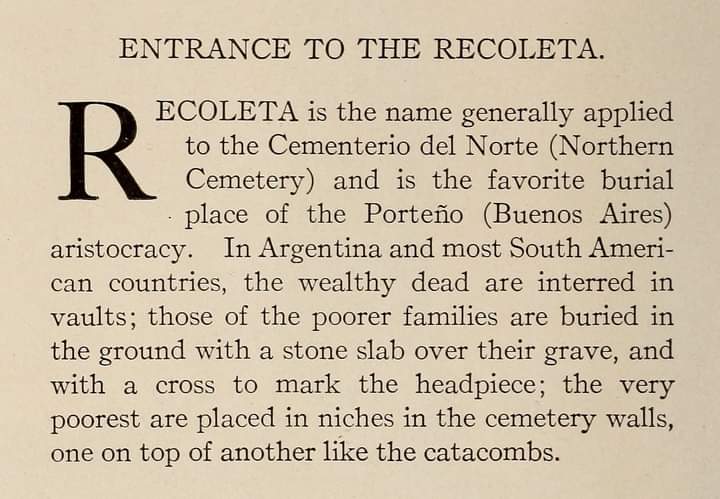
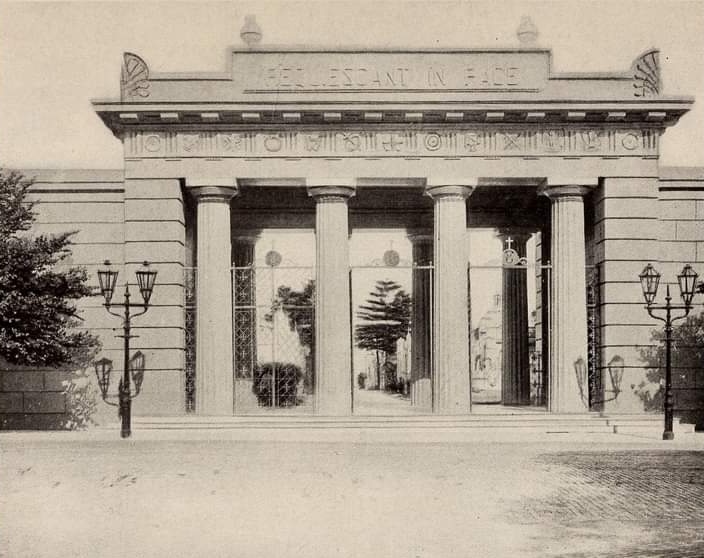
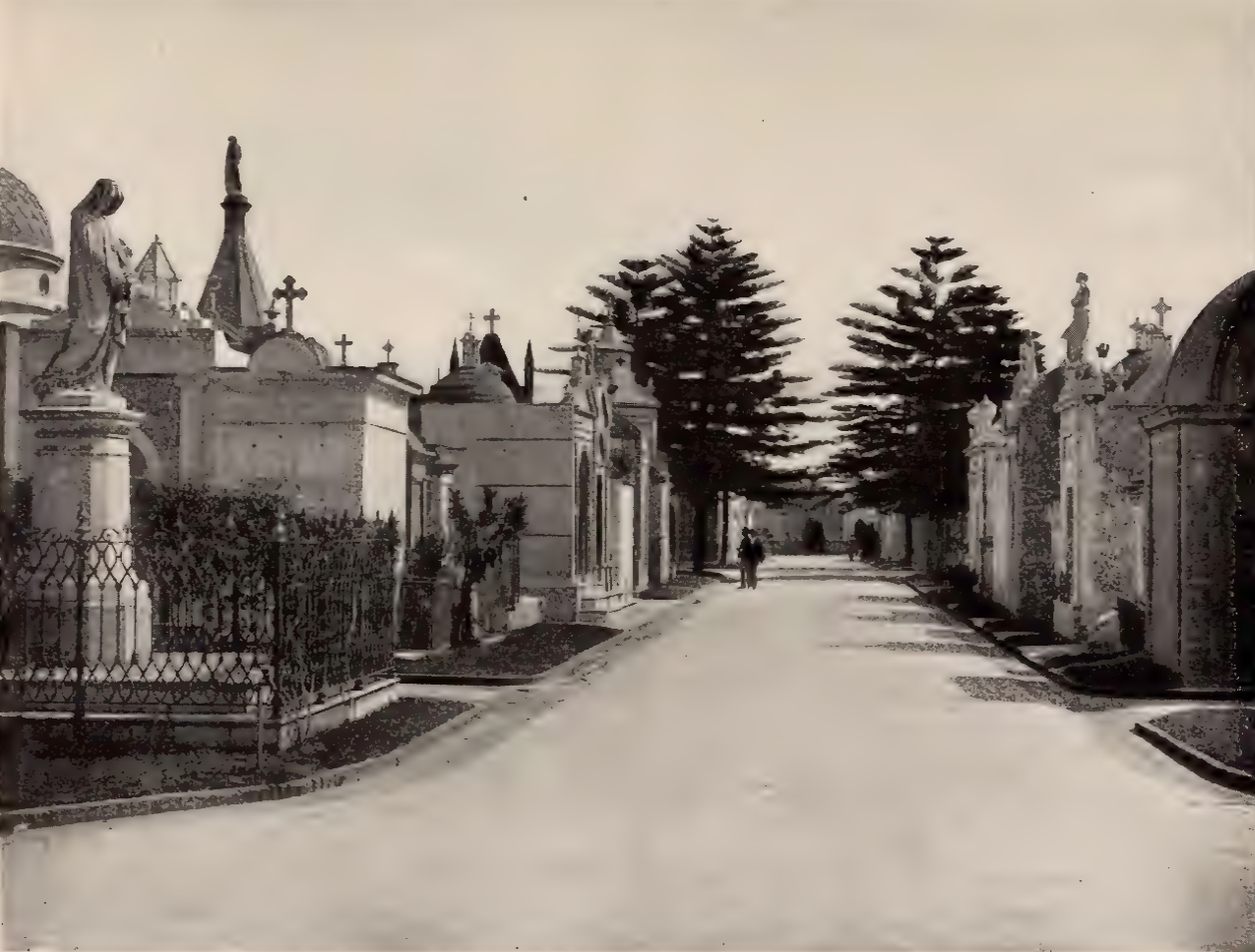
Of course Dr. Stephens couldn’t omit Recoleta Cemetery, so let’s get his opinion:

While basic, his description is more or less accurate. But Dr. Stephens should have had access to our guidebook that advises never, ever to visit during midday… as for the “gruesome” quality of the cemetery, nothing could be further from the truth. Looks absolutely peaceful:

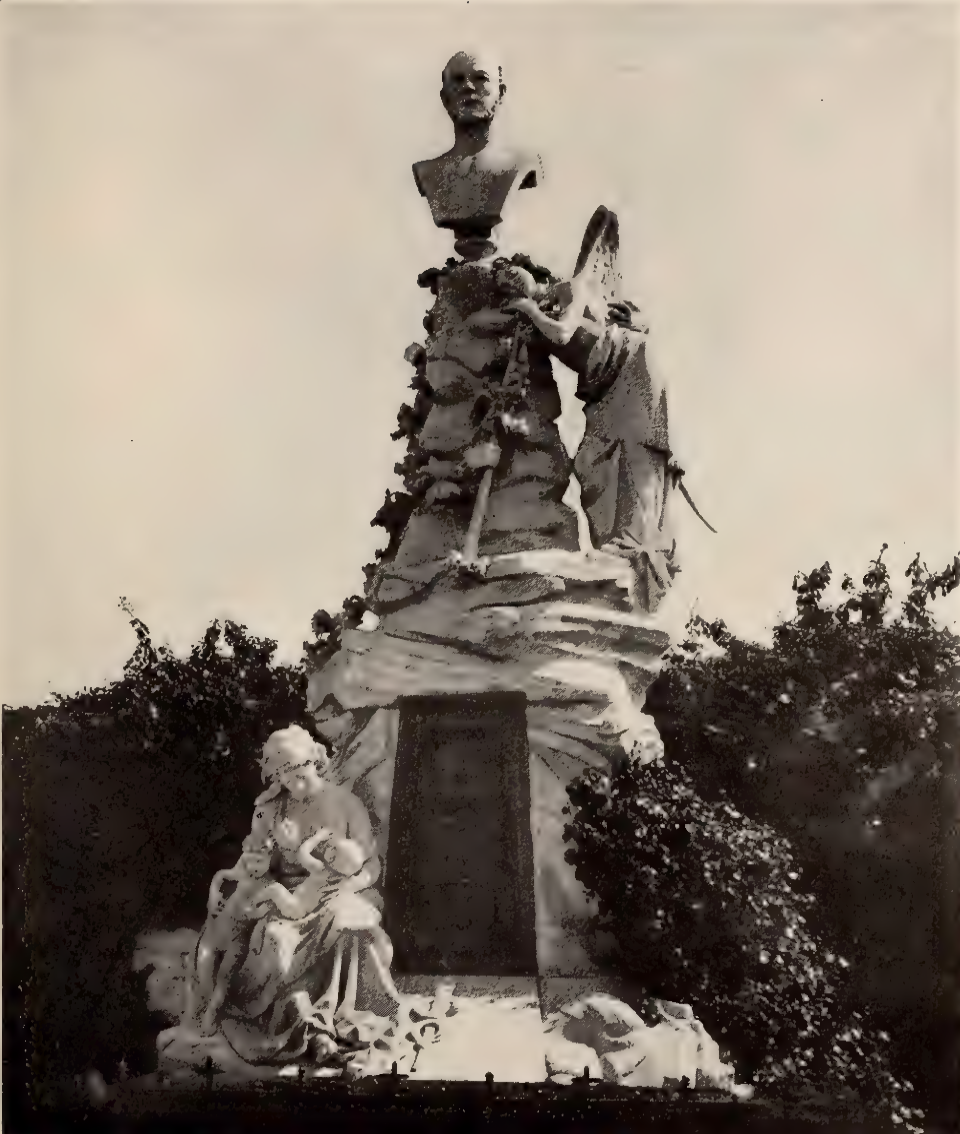
But he does appreciate the quality of art inside:

AYERZA MONUMENT, RECOLETA.
This is undoubtedly one of the finest works of art in the Recoleta.
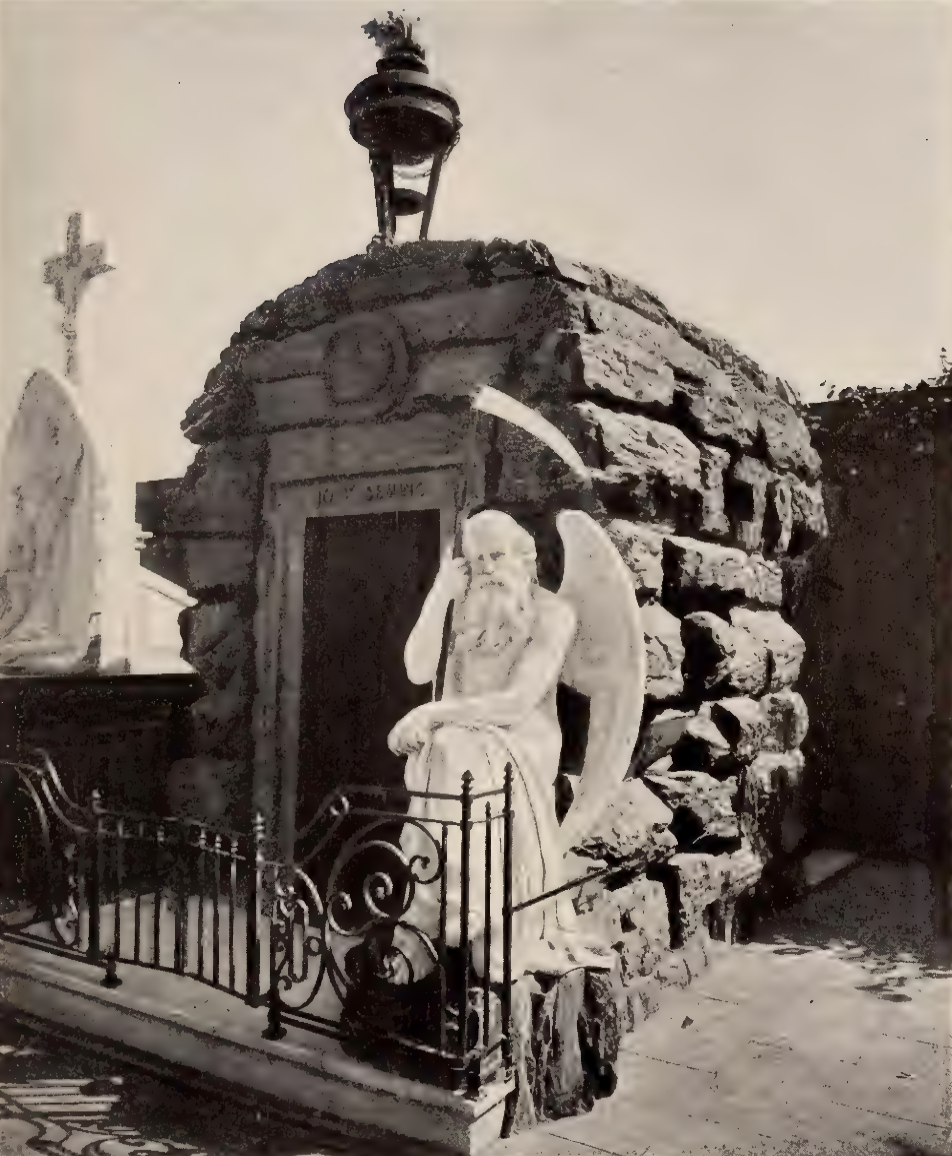
JOSÉ SEMINO VAULT, RECOLETA
This is one of the better class vaults of the Recoleta.
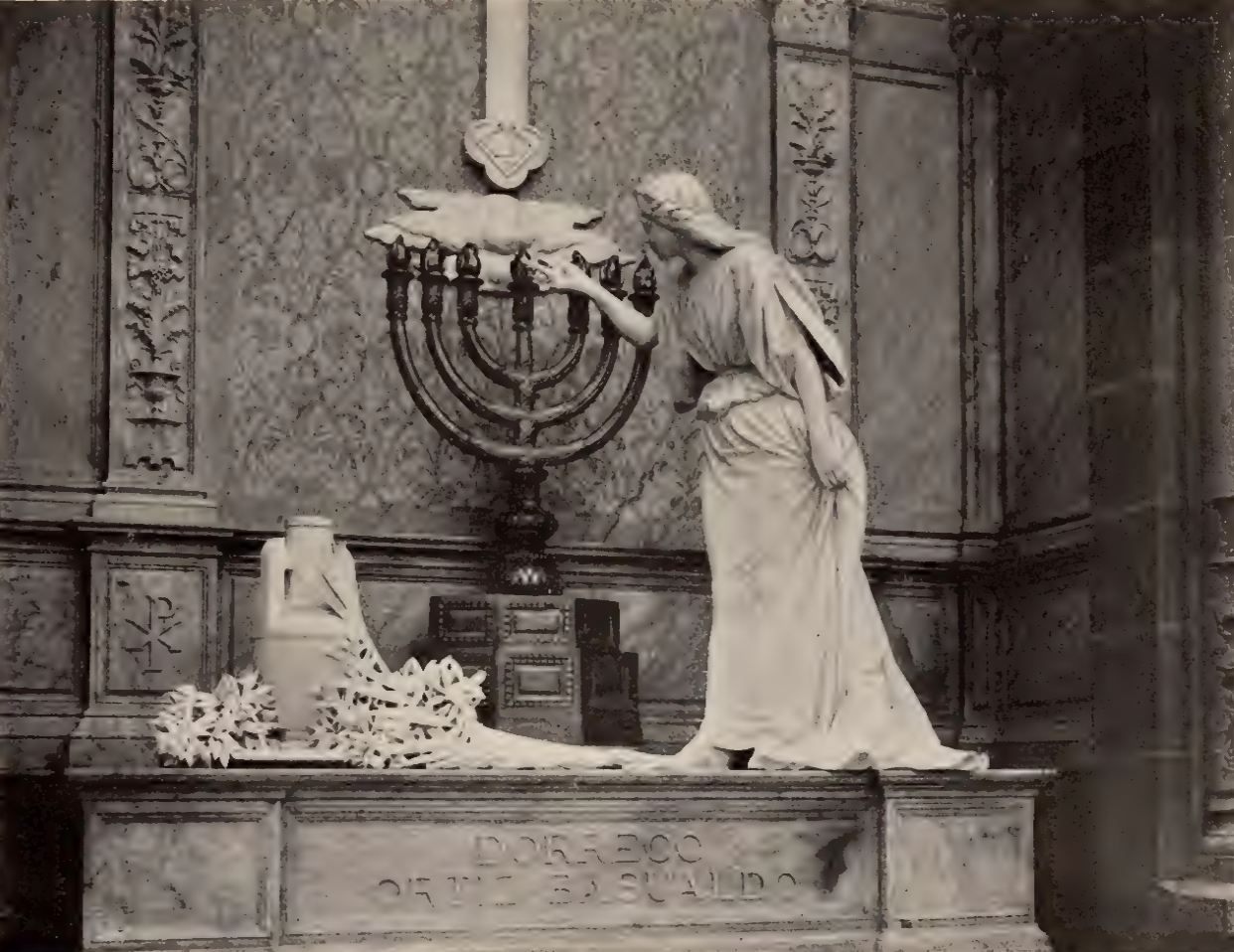
DORREGO ORTIZ BASUALDO TOMB, RECOLETA
The Basualdo family is one of the wealthiest of Buenos Aires. The final resting place of this member of the family is the acme of art and originality.

Apparently Dr. Stephens thought each mausoleum had been constructed for a single person instead of for use for the entire family in perpetuity. Still, his contribution is incredibly valuable to give us a snapshot of what Recoleta Cemetery looked like in the early 1900s… long before the city government charged an entrance fee or before celebrities crawled over crypts. He took the majority of photographs himself & gives credit when they’ve been outsourced.

Marcelo found a scanned PDF copy of this book on the Internet Archive. Please consider donating to them in order to ensure worldwide access to their enormous digital vault of information.

Leave a Comment

we’ll show you around…

Endless Mile, Buenos Aires, Recoleta Cemetery guide

A list of occupants inside Recoleta Cemetery reads like a Who’s Who of Argentine history & society. The elite, an aspiring middle class, friends, enemies & those who contributed to the general welfare of Argentina all share space in a miniature city of mausoleums & monuments.

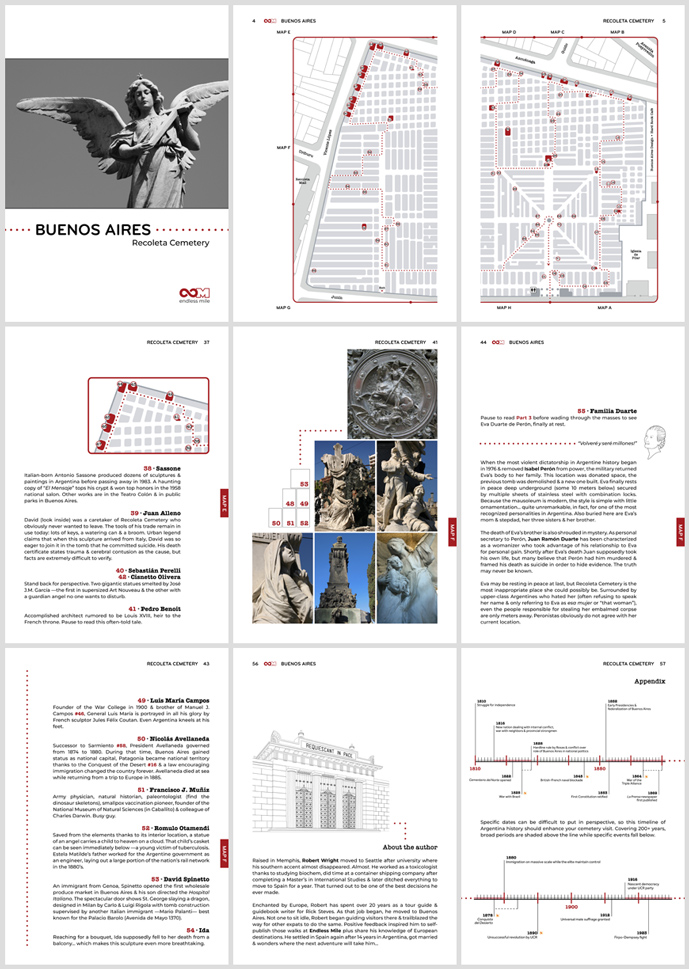
During this self-guided visit, you’ll stroll past Presidents & politicians (some naughty, some nice), Nobel Prize winners, literary greats, entertainers, scientists, military leaders, sports figures & even some who died tragically. The cemetery’s most famous resident, Eva María Duarte de Perón —simply Evita to her devotées— had a bizarre post-mortem journey (described in detail) before finally resting in peace in Recoleta.

Want to learn more? Check out our highly recommended map & pdf guide on the Endless Mile website. The authors of this blog are proud to have guided more than 2,500 people through Recoleta Cemetery… join in!

Comments closed

574. tierra de los padres

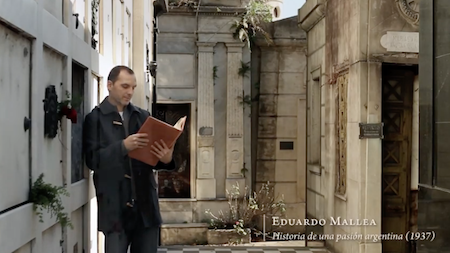
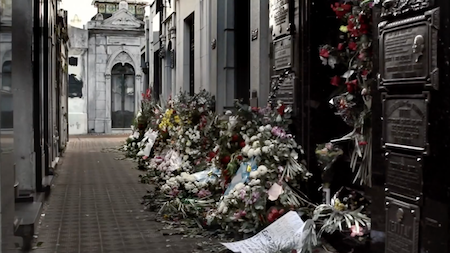
Opening with over four minutes of historical videos of violent confrontations & death scenes set to the Argentine national anthem, Tierra de los Padres (Fatherland) then switches to the walkways of Recoleta Cemetery. Director Nicolás Prividera uses this final resting place to explore not-so-traditional points of view of Argentina’s complicated history. Whatever opinion leaders had on particular issues during their lifetime, they often ended up in Recoleta Cemetery almost side by side… friends & foes alike.

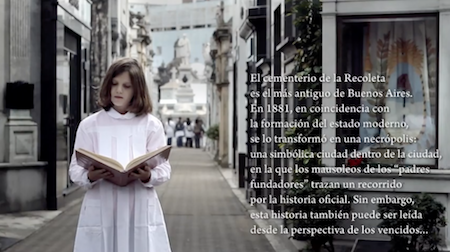
The second scene sets the tone for the rest of the movie: everyday people —not trained actors— read excerpts written by historical figures buried in Recoleta Cemetery, often at the site of their burial. Prividera explains his concept:

El cementerio de la Recoleta es el más antiguo de Buenos Aires. En 1881, en coincidencia con la formación del estado moderno, se lo transformó en una necrópolis: una simbólica ciudad dentro de la ciudad en la que los mausoleos de los “padres fundadores” trazan un recorrido por la historia oficial. Sin embargo, esta historia también puede ser leída desde la perspectiva de los vencidos…

Recoleta Cemetery is the oldest in Buenos Aires. In 1881, coinciding with the formation of the modern state, it was transformed into a necropolis: a symbolic city within the city in which the mausoleums of the “founding fathers” trace a journey through official history. However, this history can also be read from the perspective of the defeated…

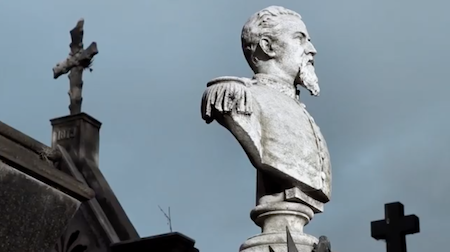
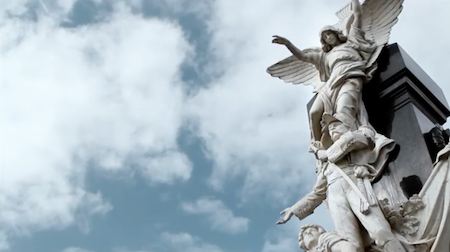
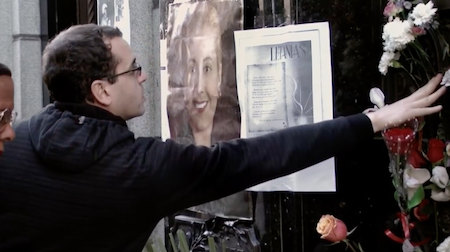
After great debates of Argentine history are spoken aloud, their readers fade away & are replaced by shots of specific sculptures, cemetery caretakers cleaning & repairing mausoleums or the occasional tourist:

Ideologies at odds are presented more or less in chronological order: civilization vs. barbarie as defined by Domingo Faustino Sarmiento · internal conflict as a means for glory in South America according to Juan Bautista Alberdi · immigrants viewed as immoral & anormal by the Liga Patriótica Argentina · Eva Perón dividing people into those who hate, those who are indifferent & those who love · Aramburu at the hands of the Montoneros · Rodolfo Walsh confronting the military junta · and many others.

As this excellent review by Guido Pellegrini states, the director’s political stance is made clear by his selection of texts & images. Anti-elite & wholeheartedly Peronista, Prividera makes no attempt to balance opinions or explain historical context. This bias can be confusing & mislead viewers who have little idea of Argentina’s many historical twists & turns… something we make an effort to explain in this blog & in our PDF guide. No small task but ultimately worthwhile to gain an understanding of Recoleta Cemetery.

The only other criticism would be a failure to respect architectural heritage. Recoleta Cemetery is almost 200 years old, & its mausoleums need to remain for future generations to contemplate like Prividera has done. But he places his readers directly on the tombs of their author’s texts —sitting, standing or inserted among the statues. While his intentions are good, those type of takes should have never been permitted.

Tierra de los Padres can be seen for free in its entirety on YouTube.
Leave a Comment

564. the oldest?

Buenos Aires, Recoleta Cemetery, Witcomb Collection

Visitors to Recoleta Cemetery often ask questions at each end of the spectrum. Who was the first person buried there? Early records list two on opening day: Juan Benito (a child of freed slaves) & María Dolores Maciel. Who was the last? Let’s check the newspapers! How much does the most expensive mausoleum cost? No way to know for certain since each is private property. What is the oldest tomb still standing? Hmmmm… that’s tricky. Here’s our best guess.

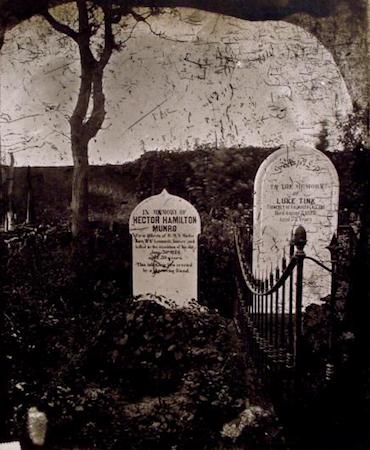
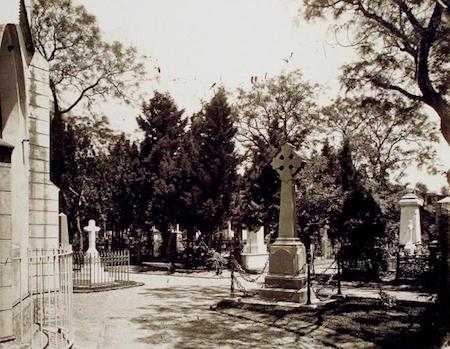
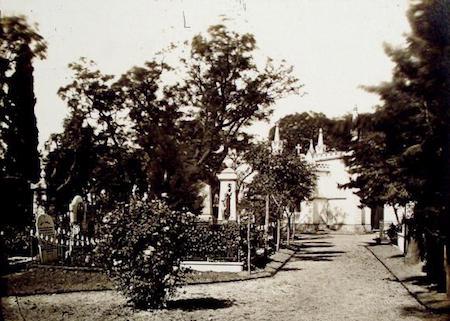
Recoleta Cemetery looked very different from its current appearance when it first opened in 1822. As the cemetery grew in status, its layout changed from grassy plots with simple tombstones to one of ornate mausoleums & vaults. Photos from the Witcomb Collection (below) show this process in progress around 1890, & a few ordinary tombstones even survive today.

Buenos Aires, Recoleta Cemetery, Witcomb Collection

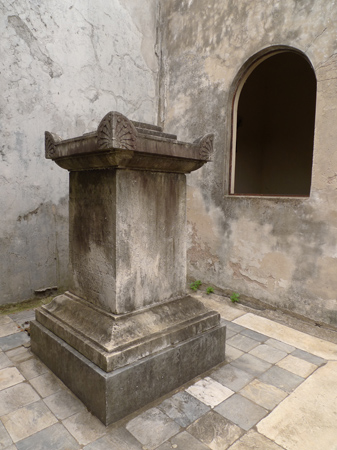
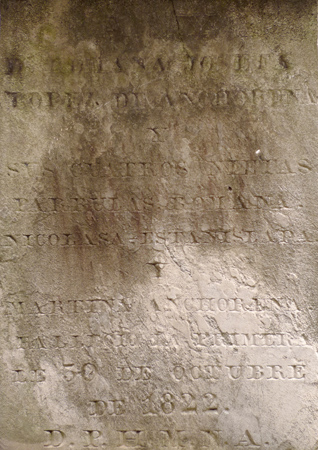
But with resale & modifications occuring over almost 200 years, few records are kept about the constructions on each plot. After all, each is private property so the cemetery has no obligation to record that kind of information. Many sources cite Remedios de Escalada —wife of founding father General José de San Martín— as having the oldest remaining plot since she passed away in 1823. However, a little exploration reveals another grave hidden in a corner not far from the entrance gate:

Recoleta Cemetery, Buenos Aires, Anchorena, oldest

Dª Romana Josefa
López de Anchorena
y
sus cuatros nietas
parbulas. Romana.
Nicolasa. Estanislana.
y
Martina Anchorena.
Falleció la primera
de 30 de octubre
de 1822.
D.P.H.M.N.A.

The Anchorena family dates back to Argentina’s days under Spanish rule. Born in Pamplona, Juan Esteban de Anchorena arrived in Buenos Aires in 1768. He married Romana Josefa de Anaya, moved up in social rank & began buying land. By the early 20th century, the Anchorena name became synonymous with big money & power, coining a popular phrase: “wealthier than an Anchorena.” They even managed to marry into European royalty, but it all started with Romana Josefa who was buried here in 1822… the same year Recoleta Cemetery opened.

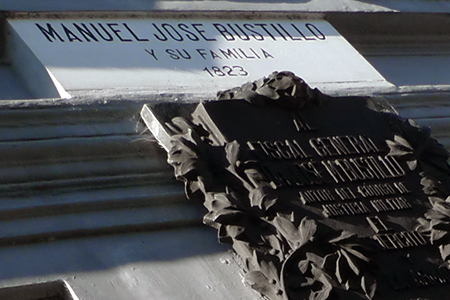
While a few other relatives are buried along with Romana Josefa, the Anchorenas never had a single, dedicated family mausoleum. Other Anchorena descendants can be found scattered throughout Recoleta Cemetery, but the honor of oldest mausoleum goes to the Bustillo family (1823).

That’s our best guess for now… until other evidence comes along!

1 Comment

555. argentina history time line

Buenos Aires, Recoleta Cemetery, Argentina, time line, history

Dates of important historical events can be difficult to put into context, as are the lives of everyone profiled in this blog… especially when names are foreign & important periods are mentioned only in passing. Covering the first 200 years, this time line of Argentina’s history should enhance your visit to Recoleta Cemetery. Broad periods are listed above while specific events are mentioned below. Although not intended to be 100% comprehensive, we’ll likely add events from time to time.

If you purchase a PDF guide, the time line comes included as an appendix on the last page. But if you are just wandering on your own, the full version of the time line is available by clicking on the image above… free of charge. Please do not use this time line for commercial purposes or for derivative works.

Leave a Comment