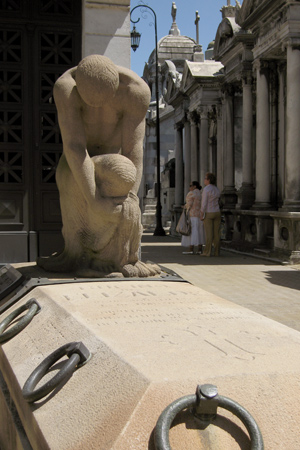
Many historians refer to Rufino de Elizalde as the first politician with a clear vision of Argentina’s future. His participation in numerous debates across the Americas & Europe left no doubt about Elizalde’s stance. Born in 1822 into a lower class military family in Buenos Aires, Elizalde put himself through law school & graduated in 1846. Joining the anti-Rosas factions, he quickly moved up in political circles, served in Congress & became a close ally of Bartolomé Mitre.
That allegiance paid off when Mitre became President in 1862. Appointed as Minister of Foreign Relations, Elizalde first voiced what Argentines have become known for—their strong ties to Europe & semi-rejection of their neighbors. This is particularly striking considering Elizalde lived decades before European immigration to Argentina began in earnest. His most famous quote states:
Es claro que existen mayores vínculos, mayores intereses, mayor armonía entre las repúblicas americanas y ciertas naciones europeas que entre las repúblicas americanas mismas… América, al contener naciones independientes, con sus propios medios y necesidades de gobierno, no puede formar una entidad política unitaria.
It is clear that better ties, more interests, better harmony exists between American republics & certain European nations than between the American republics themselves… America, consisting of independent nations, with their own means & government needs, cannot form a united political entity.
The big problem of Elizalde’s era was obviously where to form alliances. The Monroe Doctrine of the United States threatened to become Pan-American, & several nations tried to limit US influence from spreading further south. Argentina had a privileged position, far enough from the US to shift its concerns to other national projects.
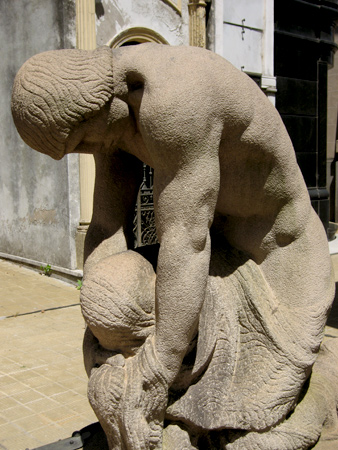
Elizalde wanted to become President after Mitre but was beat by Sarmiento. Reclaiming his role as Minister of Foreign Relations under Avellaneda, Elizalde continued to serve in various government positions until a few years before his death in 1887.
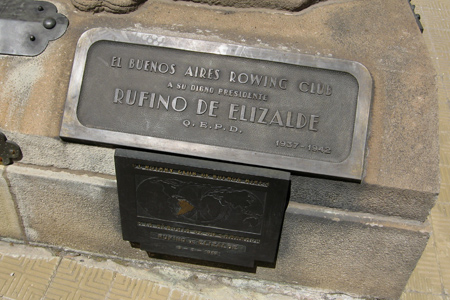
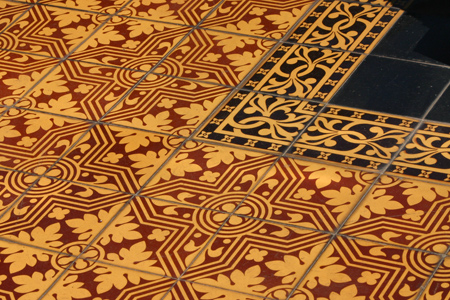
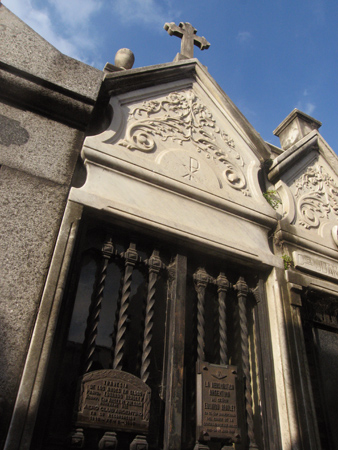
The underground mausoleum obviously dates from a later era—that of Art Deco—but a plaque gives us a clue. Elizalde’s son also shared his name & was President of the Buenos Aires Rowing Club. The son must have secured this space for his father as well as his own descendants: