Skip to content

Author: Robert

340. gral wenceslao paunero

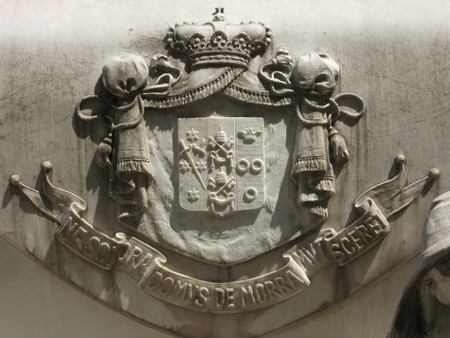
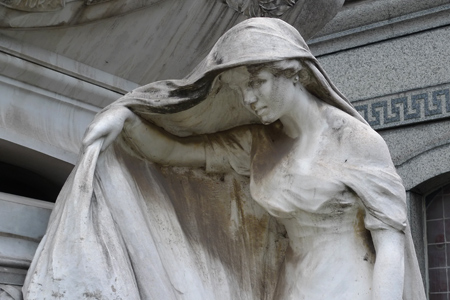
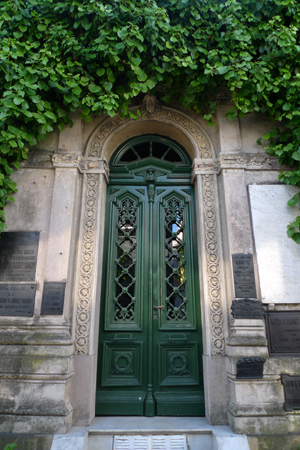
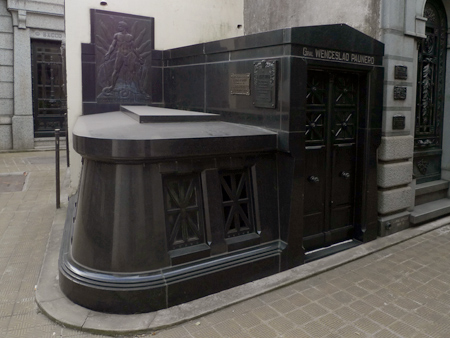
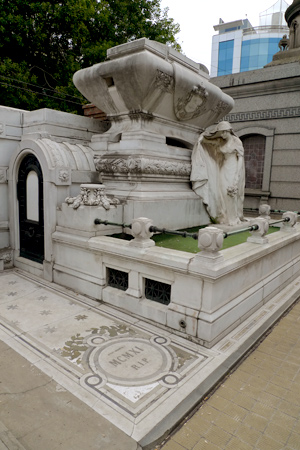
Wenceslao Paunero, Recoleta Cemetery

Early figures in Argentine history are usually the most complex to document because they participated in almost every major event. National population was smaller, the elite kept themselves in power & most military figures ran parallel lives as politicians. Adding to the mix were powerful alliances, & Argentines became involved in events spanning half the continent. Wenceslao Paunero was no exception with a lifelong military career & political allies among the most recognized names in Argentina.

Born in 1805 in Colonia del Sacramento, Paunero was a child during Argentina’s independence from Spain. At the age of 20, he joined the Argentine army & fought for his hometown during the 1825-28 war with Brazil. Although captured & later freed as part of a prisoner exchange, it did not hinder Paunero from moving up in the ranks.

Wenceslao Paunero, Recoleta Cemetery

Paunero later joined forces with General Juan Lavalle, participating in battles throughout northern Argentina & negotiating with opposition forces led by cuadillo Juan Facundo Quiroga. After exile experiences in Bolivia & Perú, meeting Domingo Sarmiento & Bartolomé Mitre in Chile brought Paunero into new political circles. Paunero fought against Rosas & was consequently promoted to the highest military position Buenos Aires could offer.

Once internal issues were somewhat settled, Paunero had little time to rest. Under the presidency of Mitre, he was sent to command troops in the War of the Triple Alliance. Mitre later promoted Paunero to Minister of War/Defense & in 1868 he ran as a Vice-President under a losing ticket with Rufino de Elizalde. Always serving his country, Paunero passed away in Rio de Janeiro as Ambassador to Brazil in 1871 at the age of 65.

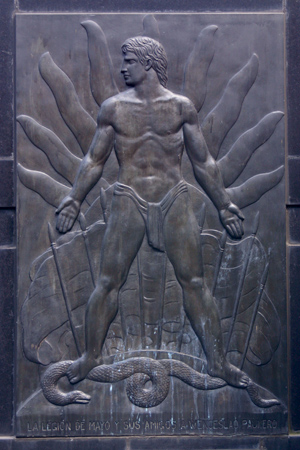
His tomb was declared a National Historic Monument in 1946 & sits quietly at the end of a row that very few tourists visit. The modern style does not fit with the date of Paunero’s death, so most likely a later family member had this built & his remains transferred to Recoleta Cemetery.

Leave a Comment

338. progress for alfonsín

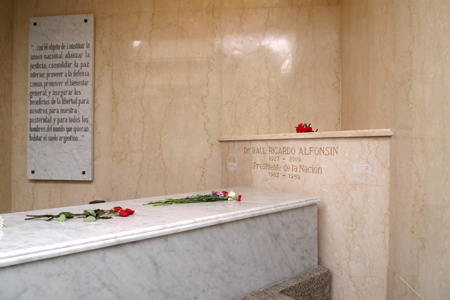
Raúl Alfonsín, Recoleta Cemetery

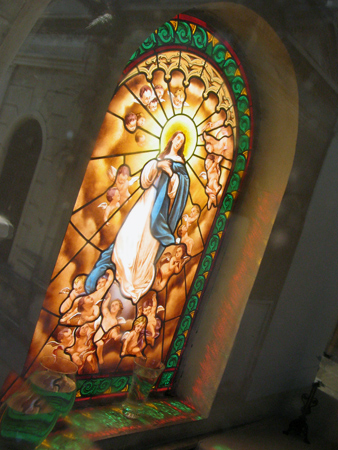
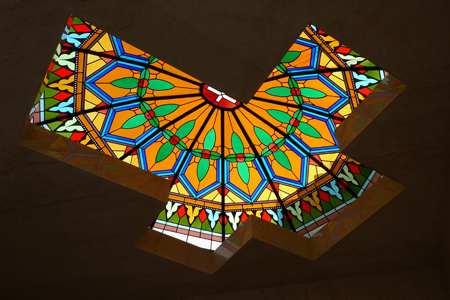
Over the past four months, a lot of progress has been made for the future burial spot of former President Raúl Alfonsín. Engravings are finished as well as a plaque in place quoting one of Alfonsín’s most famous speeches. Although the stained glass dome is not of high quality, at least it adds a bit of color:

Raúl Alfonsín, Recoleta Cemetery

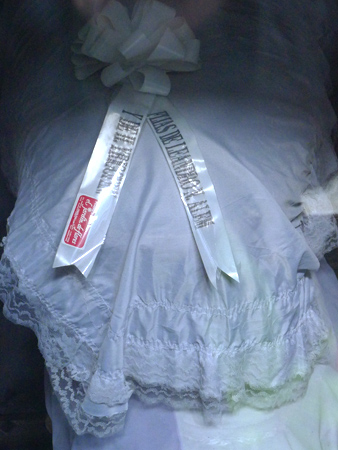
No official word as to when the transfer will take place. At least barricades have been removed from the UCR Pantheon where Alfonsín is currently buried, & everyone can now get a look at his casket:

UCR Pantheon - Alfonsín, Recoleta Cemetery

2 Comments

337. staircase destruction

As reported by every other blog concerned with saving the architectural heritage of Buenos Aires, the entrance gate staircase for Recoleta Cemetery is currently being demolished. Just like that. No one could have foreseen that repavement of the sidewalk adjacent to the cemetery could have generated such a blatant disregard for the city’s  biggest tourist attraction.

The need for some sort of change of the staircase comes from poor planning. By using thicker, pre-fabricated sidewalk tiles, the new sidewalk level is higher than the original & exceeds the base of the staircase:

Entrance gate destruction, Recoleta Cemeter

As reported by Sergio Kiernan in a mocking article appearing in Página/12’s architecture supplement m2, workers began breaking up the Carrara marble staircase with hammers before Teresa de Anchorena (member of both city & national heritage organizations) found out about the destruction on May 20th. She contacted Jorge Sábato—city Subsecretary for Urban Projects, Architecture & Infrastructure—reminding him of the mistake being made. According to Kiernan, Sábato did not respond to Anchorena’s communiqué. It was too late… several local residents had already taken pieces of staircase marble home with them as souvenirs.

Sábato’s next-in-command Miguel Ortemberg sent a letter six days later to the National Commission of Museums, Monuments & Historical Places requesting advice on how to modify the cemetery’s staircase after the damage had already been done:

Ortemberg letter

Days passed while Sábato & Ortemberg submitted a variety of documents to the city legislature claiming that there would be drainage problems given the new sidewalk level. Only one solution existed & the marble staircase would be removed & stored for any future solution or modification. All lies. Another problem they cited was the lack of a permanent disability ramp for cemetery access. Adding insult to injury, both Sábato & Ortemberg are degree-holding architects. Their solution was destruction over preservation.

Entrance gate, Recoleta Cemetery

With officials like Sábato & Ortemberg in charge, there is little question why so much destruction of the city’s architectural heritage  has happened in recent years. In spite of being listed as a National Historic Monument in 2007, the cemetery entrance gate has lost an irreplaceable part of its foundation & only serves to demonstrate the ineffectiveness of local & national government. At the very least, Sábato & Ortemberg should be removed from their posts & fined for the cost of replacing the staircase… an exorbitant amount given that 5 cm thick pieces of Carrara marble are rarely found these days.

———————————–

Update (25 Jan 2010): Six months of inaction & the cemetery entrance remains a construction site. After completion of the ramp, the makeshift barricades pictured above remained in place for several months. Only recently has an attempt been made to hide from plain sight the destruction of the staircase. A scaled photograph of the column bases currently wraps around half the entrance gate until city authorities decide what to do:

Entrance gate, Recoleta Cemetery

Leave a Comment