Skip to content

Author: Robert

360. familia de ramón a. lópez lecube

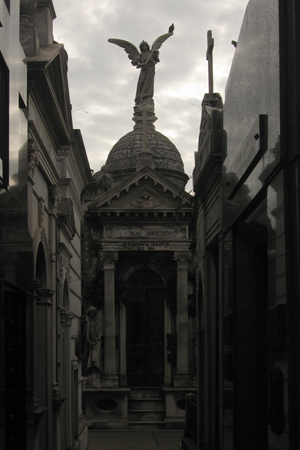
López Lecube, Recoleta Cemetery

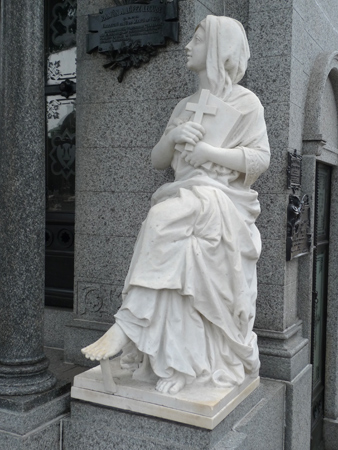
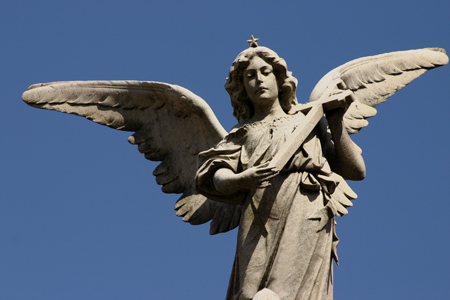
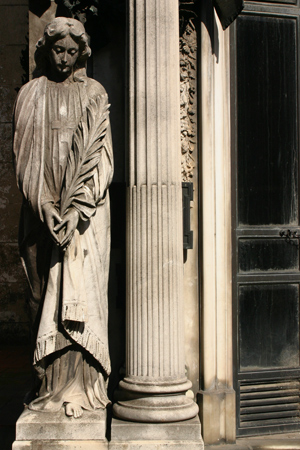
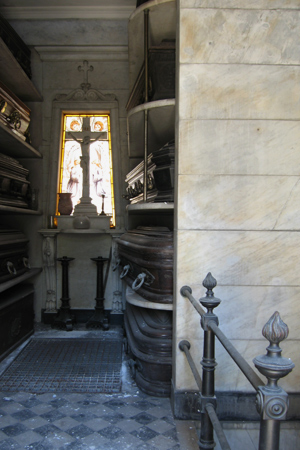
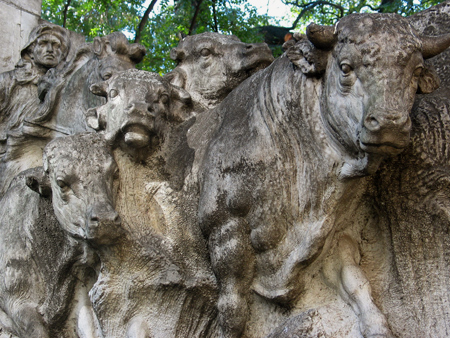
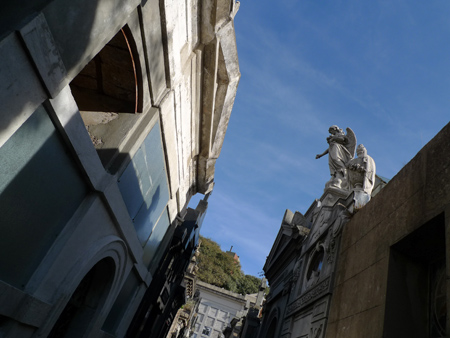
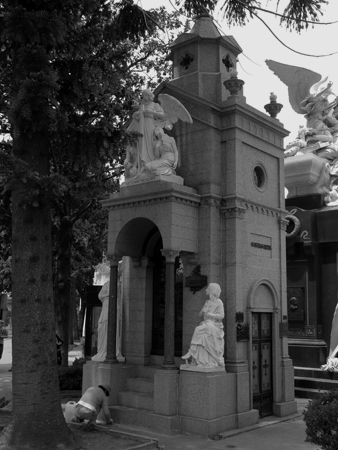
Like so many other occupants of Recoleta Cemetery, the López Lecube family owned large tracts of land in Argentina —theirs happened to be in the Province of Buenos Aires near the town of Puan. The remarkable thing about this tomb is its sculptures by Dolores “Lola” Mora… the only ones she ever did for a cemetery.

Dolores Mora, born in the province of Tucumán in 1866, received a grant from Congress to continue her art studies in Rome. By 1898 her most famous professor was Giulio Monteverde who did the crucifixion statue in the cemetery’s chapel:
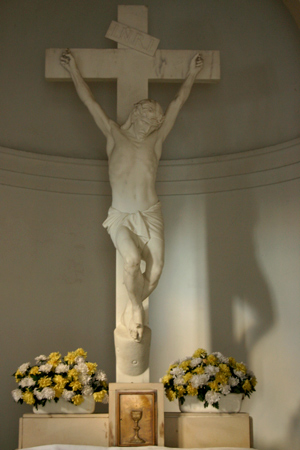
Capilla, Giulio Monteverde, Recoleta Cemetery

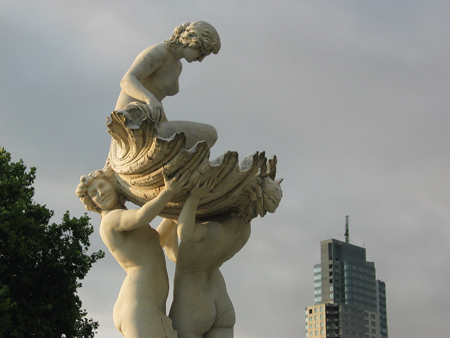
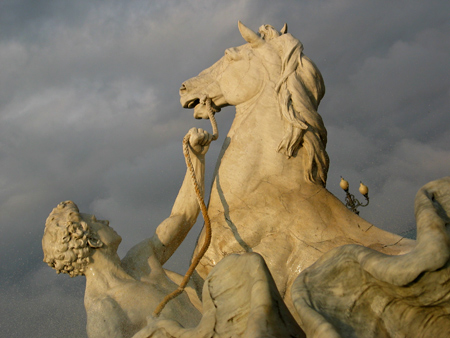
Lola Mora returned to Buenos Aires with her first public commission in 1903—a fantastic fountain depicting the birth of Venus titled “Las Nereidas.” Unfortunately the fountain was installed in a poor location for such a monumental work & was moved to Costanera Sur six years later. Some say that the naked figures on the fountain caused a scandal, but it was more likely a personal attack on Mora who had fallen out of official favor. She supervised the move, & the fountain continues to impress over 100 years later:
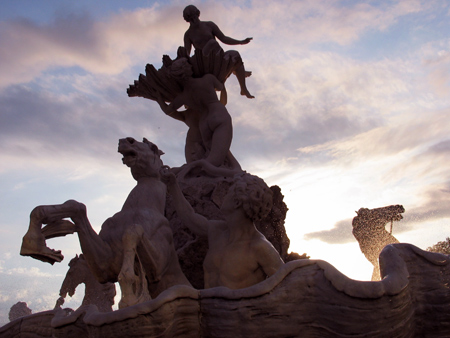
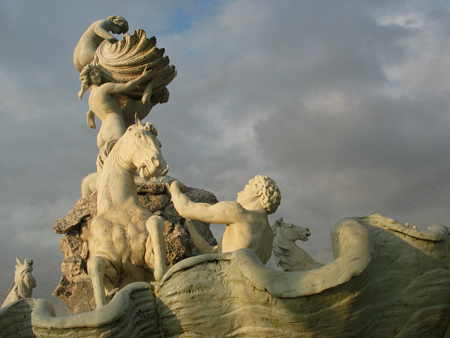
Las Nereidas, Lola Mora

Las Nereidas, Lola Mora

Las Nereidas, Lola Mora

Las Nereidas, Lola Mora

Moving the fountain was only the first of a series of public snubs Lola Mora suffered. The government refused to pay her for commissions, statues already in place on the steps of Congress were moved to faraway province, she was forced to sell her studio in Rome to pay debtors & project after project was denied her. Times & styles had changed, plus the affiliation with President Roca did her little good in later years. Lola Mora died in 1936 with no fortune or fame.

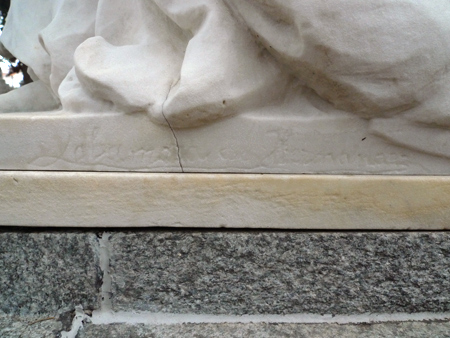
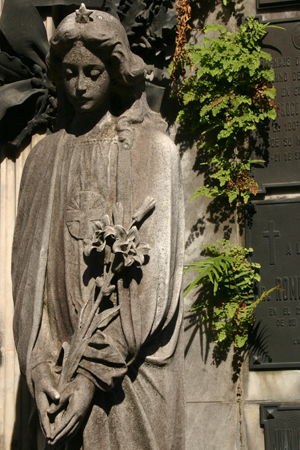
The statues for the López Lecube vault were commissioned in 1912 already after her luck began to turn. At least they are a significant addition to the artistic heritage of the cemetery. Signed by Mora during her brief marriage to Luis Hernández Otero, she was 15 years older than him & later discovered he was cheating on her. Obviously it didn’t last. The statues have been recently cleaned, making the signature almost invisible. Sometimes a bit of grit adds character:
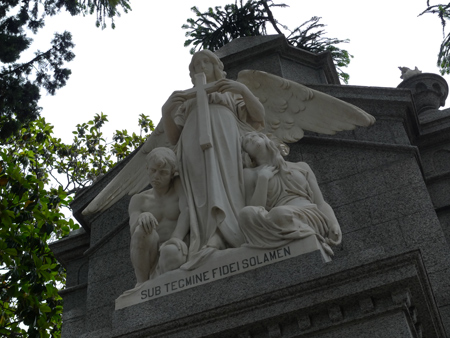
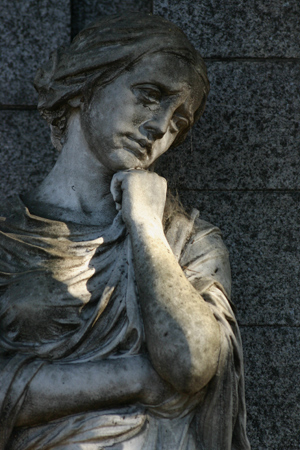
López Lecube, Lola Mora, Recoleta Cemetery

López Lecube, Lola Mora, Recoleta Cemetery

López Lecube, Lola Mora, Recoleta Cemetery

López Lecube, Lola Mora, Recoleta Cemetery

Update (24 Oct 2011): During a recent visit to San Miguel de Tucumán, I was able to visit the crypt of Lola Mora in the Cementerio del Oeste:
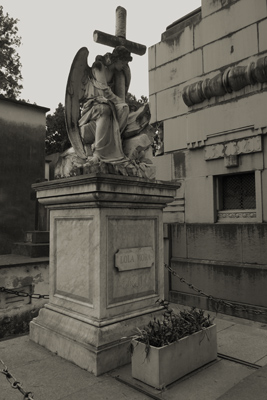
Argentina, Tucumán, San Miguel de Tucumán, Cementerio del Oeste, Lola Mora

For more info about the fascinating life of Lola Mora, watch this episode of bio.ar produced by the government-sponsored Encuentro channel (in Spanish).

1 Comment

359. bernardo de irigoyen

Bernardo de Irigoyen, Recoleta Cemetery

An important & influential politician of his time, Bernardo de Irigoyen is one of the many figures in Argentine history who have fallen from collective memory. Time to change that. Born in Buenos Aires in 1822, De Irigoyen supported Rosas & after completing a law degree was sent by “the Restorer” to negotiate border problems with Chile. Even Domingo Sarmiento, then exiled in Chile, admired De Irigoyen’s diplomatic skill.

Bernardo de Irigoyen, Recoleta Cemetery

After returning to Buenos Aires, the Acuerdo de San Nicolás was a direct result of De Irigoyen’s negotiation ability, bringing provinces of the Confederation together and forming the basis for a later constitution… no matter if Buenos Aires rejected it 🙂 And even after Rosas left Argentina for good, the new regime valued De Irigoyen. He was head of the Treasury under Sarmiento’s presidency & Minister of Foreign Relations for both Avellaneda & Roca.

Bernardo de Irigoyen, Recoleta Cemetery

When De Irigoyen ran for President in 1886, Roca supported Miguel Juárez Celman instead of his former minister. Big mistake. The 1890 Revolution might not have happened had Roca supported De Irigoyen… an interesting what-if scenario. Defeated, De Irigoyen took a break from public life until the formation of the Unión Cívica political party. He served in a number of national & provincial positions until his death in 1906.

Bernardo de Irigoyen, Recoleta Cemetery

The family vault shows few signs of maintenance these days. For someone who dedicated his entire life to serving the nation, it’s amazing that this mausoleum is not listed as a National Historic Monument:

Bernardo de Irigoyen, Recoleta Cemetery

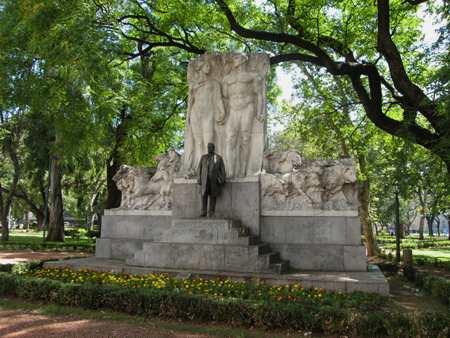
And besides a street name, the only memory of Bernardo de Irigoyen in Buenos Aires is an Art Deco statue in Plaza Rodríguez Peña:

Bernardo de Irigoyen, Plaza Rodríguez Peña

Bernardo de Irigoyen, Plaza Rodríguez Peña

Leave a Comment

357. the big wake-up

Mark Coggins, August Riordan series

What if Evita is not in Recoleta Cemetery? What if she is actually in the Bay Area?

That’s the premise behind author Mark Coggins‘ latest book in the August Riordan series. San Francisco-based private investigator Riordan witnesses the tragic death of a beautiful university student from Buenos Aires & is drawn into a mad hunt for Evita’s remains. Mark’s promo sheet goes on to say:

He needs all of his wits, his network of friends and associates, and an unexpected legacy from the dead father he has never known to help him survive the deadly intrigue between powerful Argentine movers and shakers, ex-military men, and a mysterious woman named Isis who is expert in ancient techniques of mummification.

How could you not want to read a book like that? To be honest, it’s surprising no one has done this before given Eva’s bizarre post-mortem journey. The story would make for a great movie too. Mark was nice enough to send me a pre-release copy where I found the following:

Big Wake-Up, authors note

The genesis of this book came from a tour I took of la Recoleta Cemetery in Buenos Aires, Argentina on Christmas morning, 2007. My tour guide was Robert Wright and he inspired me not only with stories of Evita Perón and her macabre odyssey, but with the accompanying stories of the politicians and military men buried in the cemetery who were responsible for, and participated in, the bizarre machinations behind it. Robert has a blog about the cemetery, which is well worth visiting if you are interested in more information about Recoleta.

Makes me wish I was still doing tours of the cemetery 🙂 In the few spare moments I’ve had since returning to Buenos Aires one month ago, I’ve read the book & can definitely recommend it. The character of August Riordan is textbook PI, & Coggins deftly takes the reader into his underground world. Check it out!

1 Comment

356. agustín zamboni

Agustín Zamboni, Recoleta Cemetery

Born in Italy in 1883, Agustín Zamboni studied in Milan & accepted a position as CEO of the government-owned electric company in Montevideo, Uruguay in 1907. Eight years later, he crossed the river & occupied the same position for the Compañí­a Italo-Argentina de Electricidad (CIAE). When CIAE President Juan Carosio died in 1959, Zamboni took over that post as well. In 1964 he renounced the position of CEO but remained president of the company until his death in 1969.

Agustín Zamboni, Recoleta Cemetery

The largest electric company in town left a unique mark on Buenos Aires; they covered their substations with a bit of medieval Italy… large & small brick castles dot most neighborhoods, usually stuck in between houses or silently disintegrating while people walk by unaware they exist.

CIAE, Puerto Madero

CIAE, Usina de la Música, La Boca

Buenos Aires went electric in 1887 thanks to a German company (CATE), but their monopoly was broken by the CIAE in 1914. The Swiss-Italian joint venture had a concession until 1962, but a lot happened during that time. Other companies came & went, its contract was extended, & neither Perón nor Frondizi nationalized them, but Isabel started the process. Incorporated into SEGBA in 1978, the remaining CIAE structures were donated to the city government in 1987. The generator situated in Puerto Nuevo —the largest of them all— passed into private hands in 1992.

CIAE, Puerto Nuevo

For further information, read a 12-part series about the history of the CIAE on our sister site, Endless Mile.

4 Comments